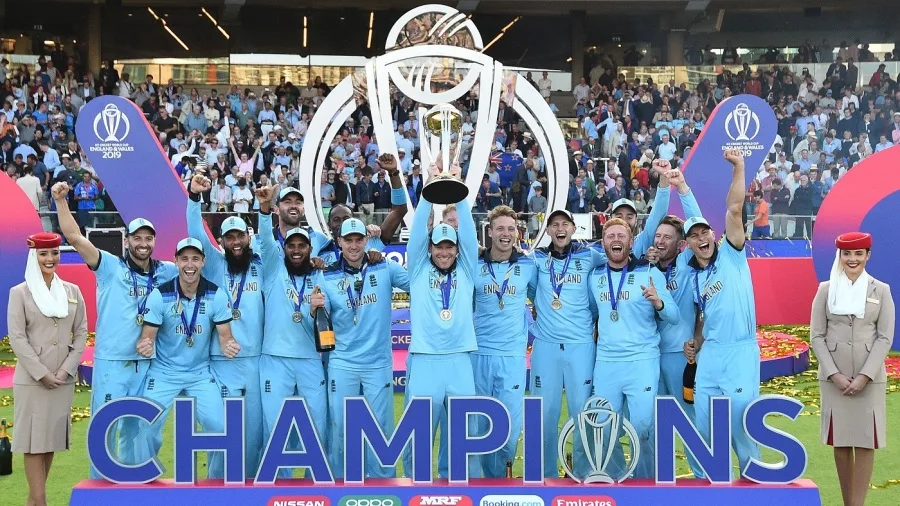
The 13th Cricket World Cup will be “kicking off” on Thursday 5th October, being held in India who are hosting the tournament on their own for the first time, previously “Co-Hosting” in 1987, 1996 and 2011.
England will be kicking off the competition at Narendra Modi Stadium in Ahmedabad where they will play New Zealand, who they beat by the “barest of margins” in the 2019 Final.
I want to take some time to look at the “ODI” (One Day International) colours worn by England through-out the tournament’s history, from 1992 up to the current 2023 competition and will rate each kit out of 5 Stars!
1975 to 1987
First, a quick overview of the those earlier tournaments, there were four competitions here with England hosting the first three (1975, 1979, 1983) and India / Pakistan hosting in 1987, These tournaments were all completed with Countries wearing the traditional whites, with the England Team barely changing their look over these 12 years!

1992: Australia / New Zealand
Welcome to modern cricket, coloured clothing, the return of South Africa, new ways to calculate rain effected matches… the Cricket World Cup was about to change!
The Biggest Change was the introduction of coloured kit for each country, there was a nice uniformity to the kit with all countries having the “rainbow” element across the shoulders of the shirt and names were introduced to the back of players shirts. The shirts were produced by Australia Manufacture Hogger Sports.
Each Country was a different colour and England were in Sky Blue, a colour used before the country in their tours of Australia and the ODI Competitions on those tours of the late 80s and early 90s.

England CWC Performance:
- Runners Up
- 2nd in League Phase (9 Countries)
- Total Games – 10 (6 Wins, 3 Lost, 1 No Result)
- ODI Kit Rating – ⭐⭐⭐⭐⭐
1996: Pakistan / India / Sri Lanka
The second Cricket World Cup that saw a uniformity in the kit design of coloured clothing, with all Twelve (increased from 1992) Countries in the same “Template” with each country in it’s own colour. Again a “Rainbow” element was part of this design, this kits were produced by Rolex Hosiery a Delhi based clothing company and Wills was a brand of cigarettes made by the India Tobacco Company who sponsored the 96 World Cup – thank you to Andy Rockall (@Statto_74) for this information.
England had a darker shade of Blue for this tournament not quite a Royal Blue but certainly darker than England had been seen in before with coloured cricket clothing becoming more and more common place in the International matches, again there were player names on the shirts.

England CWC Performance:
- Quarter-Finals
- 4th in Group B
- Total Games – 6 (2 Wins, 4 Lost)
- ODI Kit Rating – ⭐⭐⭐⭐
1999: England / Wales / Scotland / Ireland / Netherlands
The Cricket World Cup returned to England but this time with 5 Countries in Total hosting games across Europe. The 1999 Tournament was the final time that there was just one company making all the kits for the 12 countries participating in this competition, with Asics. The Japanese sports manufacturer produced bespoke kits for all Nations, each using elements of their National Crests into the shirt desgin.
Another first in Cricket World Cup History was Squad Numbers, which paired with player names on the shirts were used in this tournament, the numbers used were just 1-15 (as we see in Internation Football tournaments), rather than the free for all with numbers we see now.
England’s blue kit was another shade of blue, not as dark as the previous World Cup but it was the first time red was included in the kit as additional detail, something that would be part of the England kits for the next 12 years in World Cups.

England CWC Performance:
- Group Stage
- 4th in Group A
- Total Games – 5 (3 Wins, 2 Lost)
- ODI Kit Rating – ⭐⭐⭐
2003: South Africa / Zimbabwe / Kenya
2003 Tournament was the first to be held in Africa and became the first tournament when countries could use their own Kit Suppliers in the competition, as well as players using their own numbers from ODI Cricket, so numbers 1-99 could be used by players.
Another first was that the Country names appeared on the front of the shirts, something seen in tournaments to this day and probably linked to the introduction of sponsors being front and centre of cricket playing shirts (as we see in football), having the country name across the chest and sponsor moving to the sleeve, reduced the visibility of sponsors to International Shirts.

England had moved on from Asics and were supplied by Admiral, the first time Admiral had supplied kits for England in a World Cup since the football team in 1982! A return to darker blue, probably the darkerst blue used up to that point by the team.
England CWC Performance:
- Group Stage
- 4th in Pool A
- Total Games – 6 (3 Wins, 3 Lost)
- ODI Kit Rating – ⭐⭐
2007: West Indies
The Cricket World Cup Circus moved to The Caribbean for the first time and it was the second tournament where the England ODI kit was supplied by Admiral, meaning the classic football kit manufacturer made more appreances in the Cricket World Cup than the Football World Cup for the English National Team.
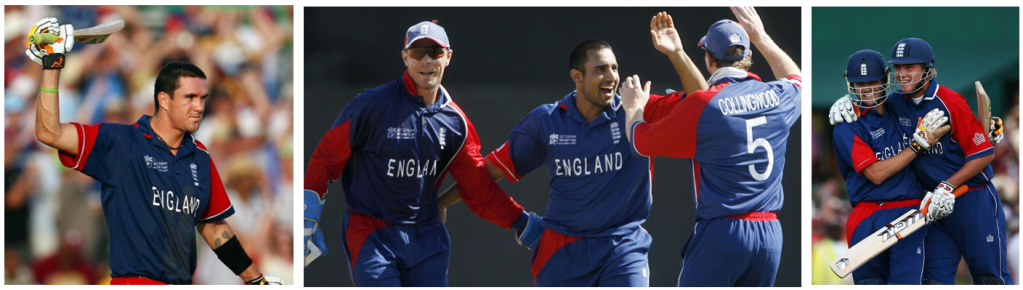
The red of this kit was a more prominent feature of this kit’s aesthic increasing more the previous two incarnations, this kit was paired with asymmetric red sleeves and trousers.
For me the most dull ODI Kit seen in World Cups for England and what would be the end of the England x Admiral Relationship.
England CWC Performance:
- Super 8 Stage
- 2nd in Group C
- 5th in Super 8 Group
- Total Games – 9 (5 Wins, 4 Lost)
- ODI Kit Rating – ⭐
2011: Bangladesh / India / Sri Lanka
In the years between 2007 and 2011 World Cups the England team moved kit manufacturers and were now with Adidas, not necessarily known for the work in the cricketing world but produced some wonderful kits for the team, including a shift to a very dark shade of blue, a colour which was worn in the team’s first victory in an ICC International Tournament winning the T20 World Cup in 2010.
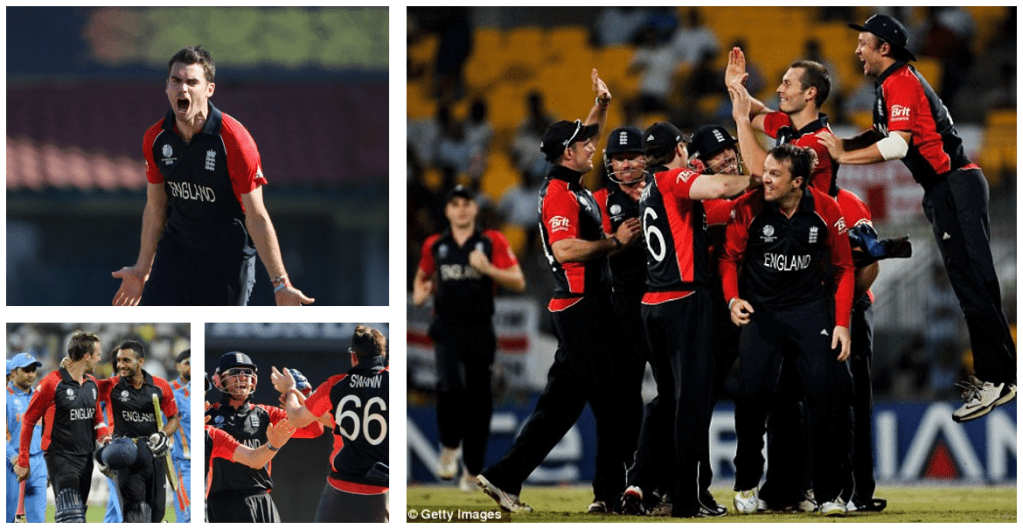
For this World Cup which returned to the Asian Continent, the dark blue was paired with Red Sleeves providing a new look in design for the English Team and one of the best seen in The Cricket World Cup.
England CWC Performance:
- Quarter-Finals
- 3rd in Group B
- Total Games – 7 (3 Wins, 3 Lost, 1 Tie)
- ODI Kit Rating – ⭐⭐⭐⭐
2015: Australia / New Zealand
The pattern of going darker and darker with the shades of blue used by the English Team was broken in the 2015 Tournament in Australia and New Zealand, with a return to Royal Blue shirts, not seen since 1999. Again partnered with Adidas, the shirt also included a pattern of one the “Three Lions” of the National Crest, similar to what we have seen with 1992 England Football 3rd Shirt.
However, there was a change to overall look with the shirt paired with navy trousers and caps, to provide an overall two-tone blue ODI Kit, something not seen before in World Cups for team, another win for me of the England x Adidas years, in their final collaboration for World Cup ODI Kits.

England CWC Performance:
- Group Stage
- 5th in Pool A
- Total Games – 6 (2 Wins, 4 Lost)
- ODI Kit Rating – ⭐⭐⭐
2019: England / Wales
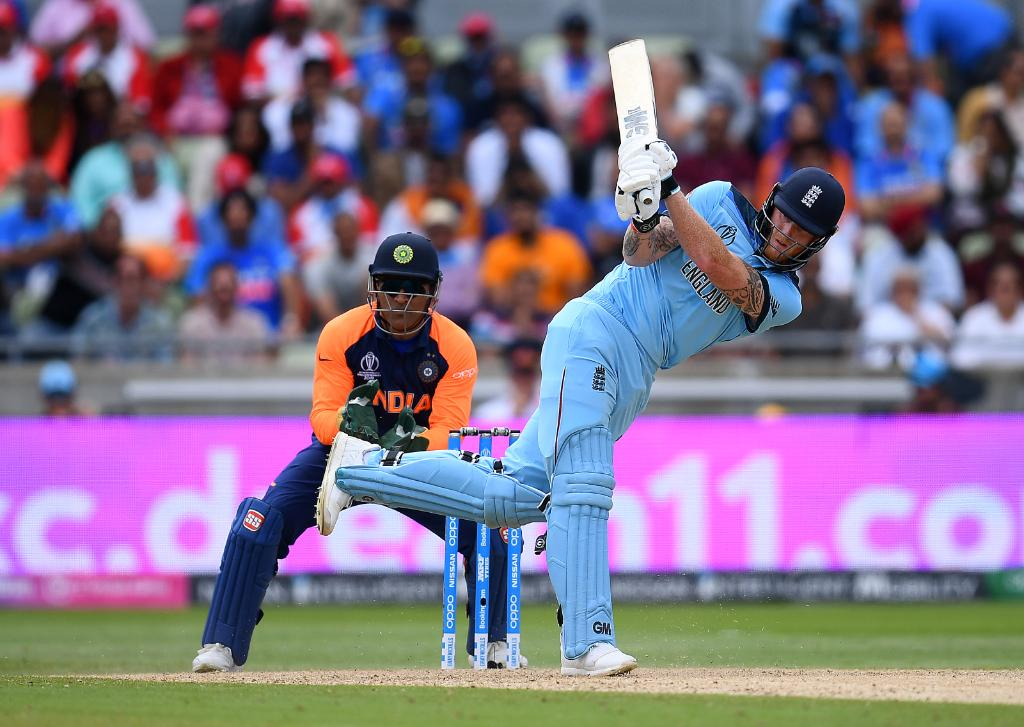
A return to Sky Blue for England, who hosted the tournament for the 5th Time and manufacturers New Balance pulled off a wonderful homage to the kit worn in 1992 with a shoulder design reminciant to that kit but using various shades of blue with red trim to deliver one of the most iconic England kits in any sport (yes the result also might have something to do with that!!)
The Sky Blue look was only ever used for the World Cup, the shirt was paired with Navy Trousers after this tournament.
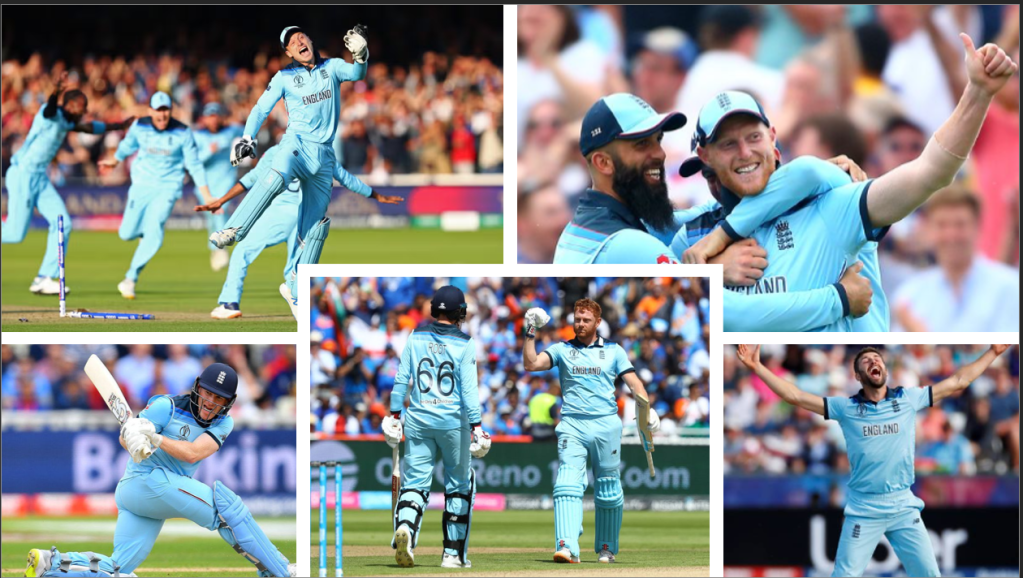
A first of this tournement was the introduction of “Alternative” Shirts / Kits for colour clashes, something not normally asscioated (or needed) with cricket, it did provide a new talking point for Kit Lovers like ourselves! India, one of the teams that changed when they played England.
England CWC Performance:
- WINNERS
- 3rd in League Phase (10 Countries)
- Total Games – 11 (8 Wins, 3 Lost)
- ODI Kit Rating – ⭐⭐⭐⭐⭐

2023: India
For this World Cup the English Team will be doned in a Castore Kit, the 5th Kit Manufacturer since 1999 and their 3rd different one in the last 3 World Cups. It is a return to Royal Blue and back to some red detailing within the shirt and to give us an overall look that was reminiscent to what was seen in 2015.
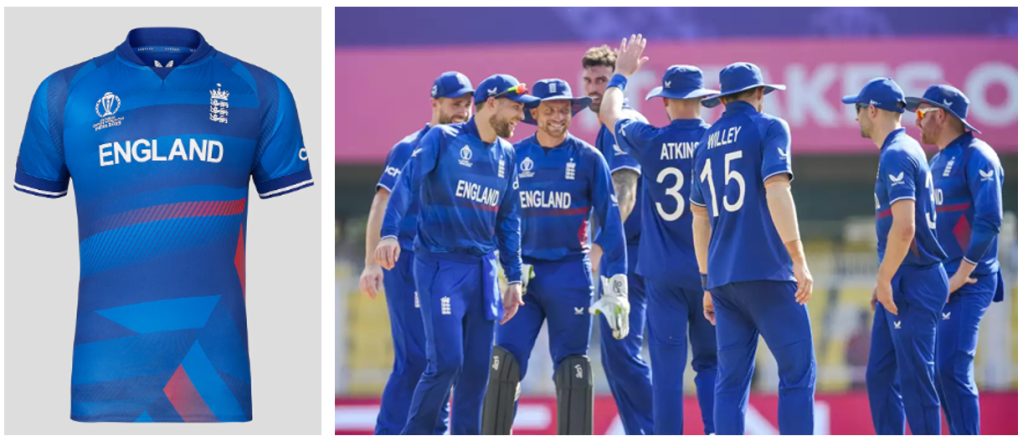
It will be interesting to see if we see “Away” kits used in this tournament, and if England do use one would they use the current Red T20 Shirt which is paired with Navy Trousers as well.
As no performance stats can be shared yet, I will just provide my rating of the Kit.
- ODI Kit Rating – ⭐⭐⭐
Cricket World Cup Kit Firsts…
- 1992 – Coloured Clothing and Player Names
- 1999 – Squad Numbers, 1 to 15
- 2003 – Countries own Kit Manufacturers
- 2003 – Player numbers could be anything between 1-99
- 2003 – Country Names on Front of shirts
- 2019 – Away Kits for Colour Clashes
- 2023 – ???
So there we have it, my deep dive into England Cricket ODI Kits of the World Cups, did my ratings line up with your views of these looks, let me know your thoughts and comments below or at @Kit_Geek





 Football Kit Geek - @Kit_Geek