England Kit History: 1980-1989

As regular readers will know I am looking to document the England Men’s National Football Team’s Kit History from 1960 to The Modern Day, creating some reference articles and documents for those that like to have quick reference to these things.

So far, I have the following:

England played 116 Games between 1980 and 1989, the most games in decade so far, saw The Three Lions wearing their Primary (Home) Kit 97 times and change Kits again just 19 times, the same number of times overall but only 16% of the total games.

The 80’s was also the decade where we started to see more regular changes in Kit Design.

1980 – 1981

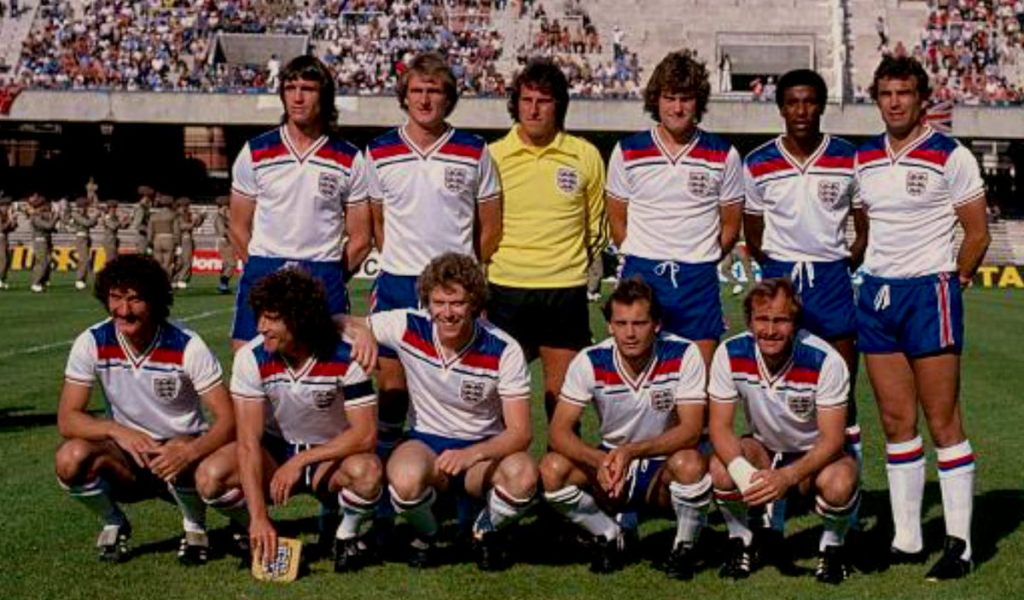
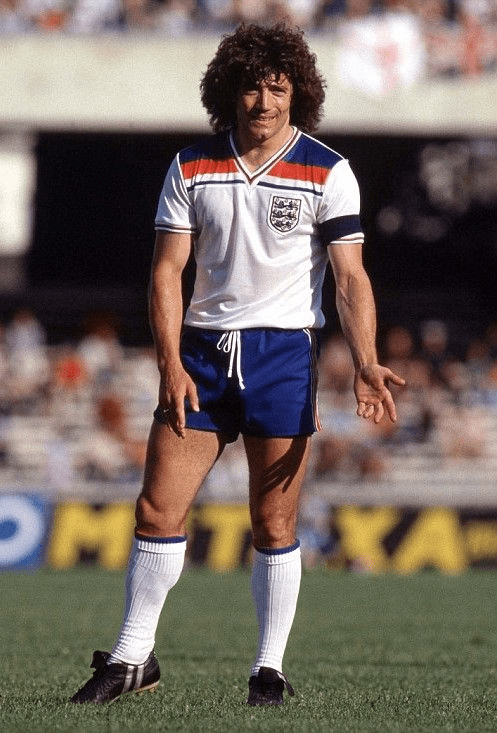
The 1980s started with England in the same kits as they ended the 70s, however this was about to change with the second set of Admiral Kits introduced in May 1980 ready for the European Championships of that summer, the first tournament England qualified for in 10 years!

This Kit is one of England’s most well known and loved by the fans with it’s unique shoulder panels introducing more colour to the England shirt than had ever been seen before and huge leap from the Kit worn just six years before (Primary Kit of 1964-1974).
One thing to call out here was in the European Championship hosted by Italy, England wore a version of the Kit that was unbranded, to comply with UEFA laws of the time.
The team wore three different kit looks in 1980, with a return to all white look in the game against Romania, this was the first time in over 10 years since the team went for an all white combination, that was at The World Cup 1970 in Mexico!
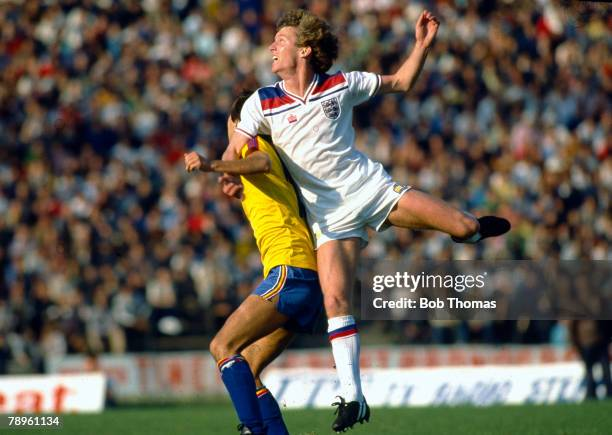
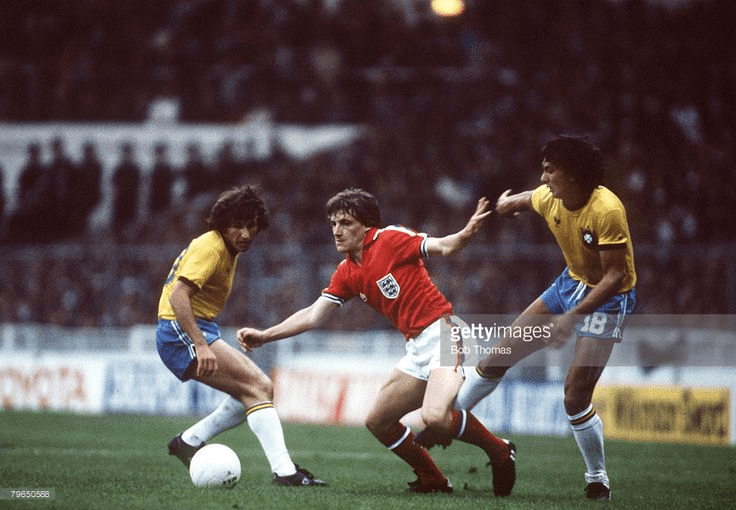
1981 started with another all white look again and then in the next two fixtures both at Wembley (Romania and Brazil) saw the final outings of the first change kit from Admiral in it’s first use since 1979.
1982

1982 was a World Cup year and the first one England have played in for 12 years! It also gave us a new change kit from Admiral, the design mirrored the Primary Kit but used traditional red as the base colour. The first game it was used was the final warm up game before the World Cup in Spain against Finland, however it was its use in the World Cup that raised some eyebrows…

Against France in the opening game the shirt was paired with its default white shorts and white socks (from Primary Kit) for nice looking Kit Mash Up.

The interesting change was in the game against West Germany (2nd Group Phase of the competition) where there was slight change to the look of the shirt, with an extra white band appearing in the design.. also, this shirt carried the Admiral Branding!

Although not all players in the game had this alternative version….!

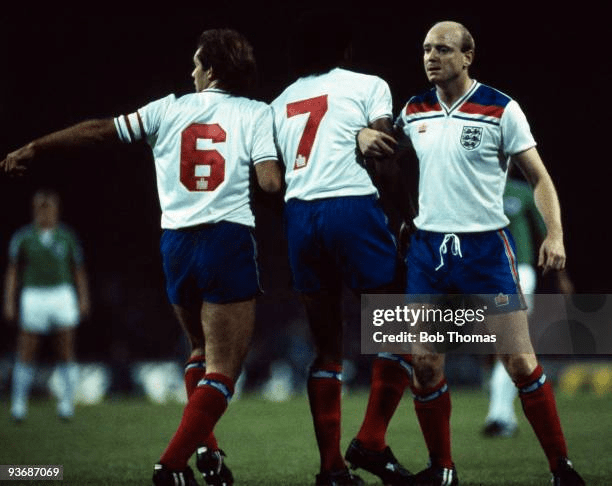
England meet West Germany in the Autumn of 1982 and went for another kit mash up, wearing change socks (red) with the Primary Kit… a look not seen since 1979, and just look at those wonderful numbers, might just be one of my favourites in England’s kit history.
1983 – 1984
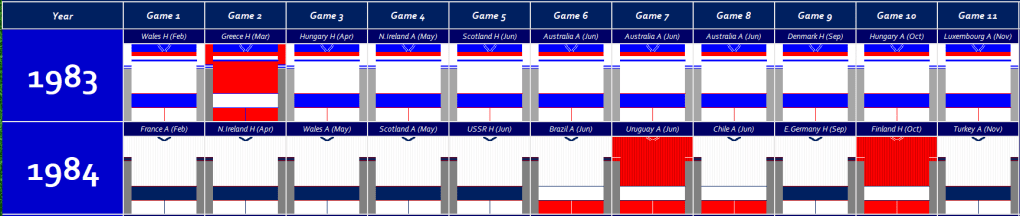
In terms of kit usage 1983 was fairly uneventful, 11 games in total with the change kit used just once in its last outing was at Home to Greece in March, the final ever use of the famous kit design was in November when team played in Luxembourg, change was on its way…!

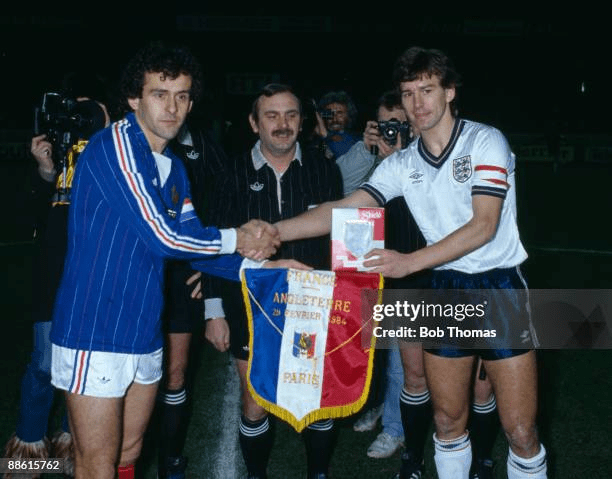
We are now into 1984, and a return of Umbro as the Kit Supplier for The Three Lions but this time carrying the “Double Diamond” branding for the first time, and they would provide kits for the next 29 years! The new look striped back the colour and design of the Admiral years and went for a more traditional look with a return of navy blue shorts! The kit was first worn against France in February 1984.
England toured South America in the summer of 1984 after failing to qualify for the Euros and this tour gave a first look of the new Umbro Change Kit, with the Secondary shorts and socks being worn at Brazil (remember that John Barnes goal) and Chile!
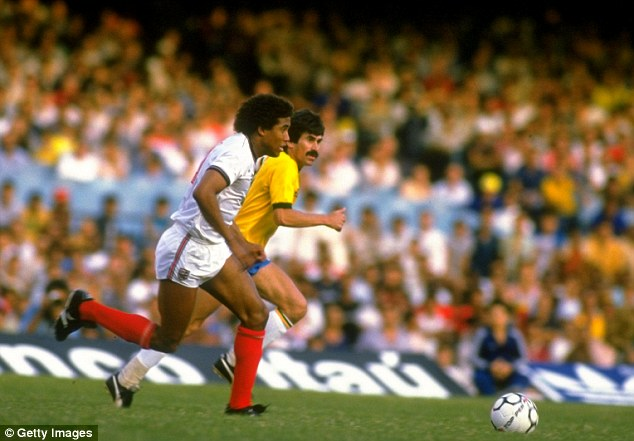
With the full Secondary kit being worn at Uruguay.

1985 – 1986

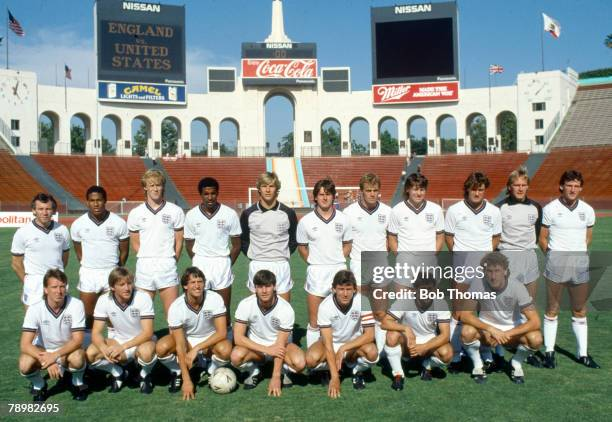
1985 gave us a return of the All White look again, mashing up Secondary shorts with Primary shirts / socks, this was worn in the game against United States that summer, not sure the light grey goalkeeper kit would be allowed to used with that kit nowadays!
The left over elements of primary / secondary kit were used in the game against Turkey later that year, with Secondary shirts and socks used with Primary shorts to give a red / navy / red look, one I particularly like England in! This also meant England went four games in a row with four different kit looks, the first time this had happened since 1974 and that included the change from Umbro to Admiral!

1986 was another World Cup year and like the last time tournament was held in Mexico there was an “airtex” version of the kit used for the tournament. By this team England had introduced a Sky Blue 3rd Kit, in the same template as the other two kits and for the actual tournament this kit was registered as the Secondary Kit for The Three Lions.

The only time elements of this kit were seen in action were in the Quarter-Finals against Argentina when they were worn with the Primary shirt to give us a unique white / sky blue / sky blue look, something never seen before or again!
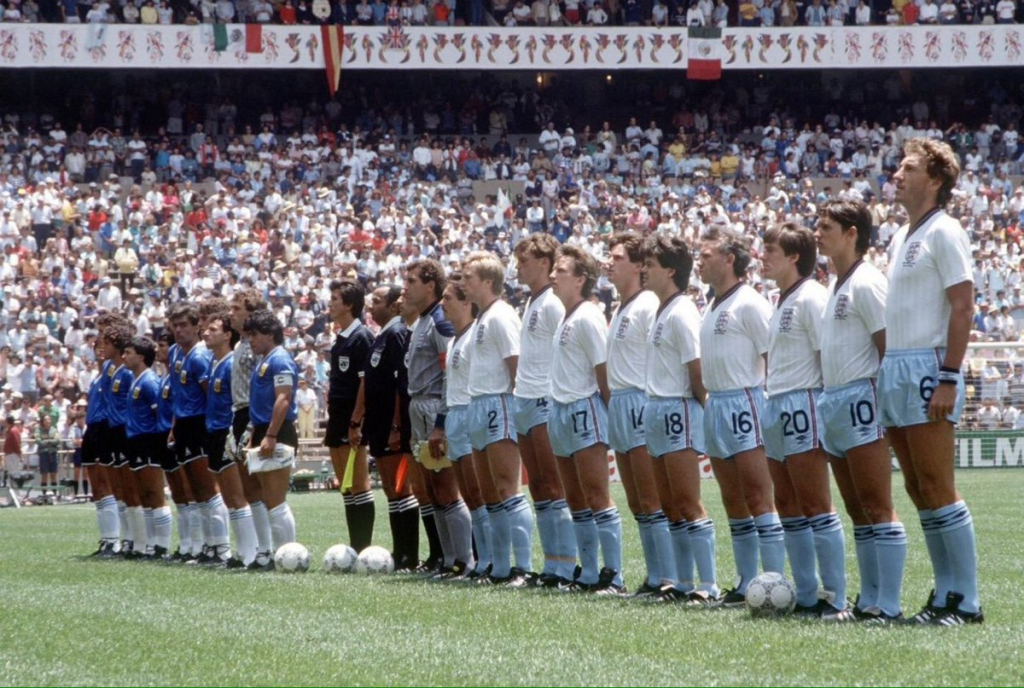
This was the only alternative version of the England kits used that year!

1987 – 1989

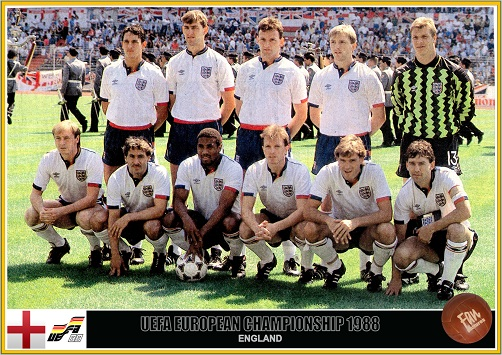
1987 started with All white returning in a famous win at Spain, however by May of that year Umbro released their 2nd Primary Kit of their return for one of my favourite kit looks of all time.. first worn against Brazil! This would be the 4th and final official Primary Kit used in the 80s.
The change remained the same through 1987 was worn at West Germany and then for the final time in 1988 at Israel. The new change kit was introduced in Spring of that year and first worn against Colombia at Wembley in the lead up to Euro 88.

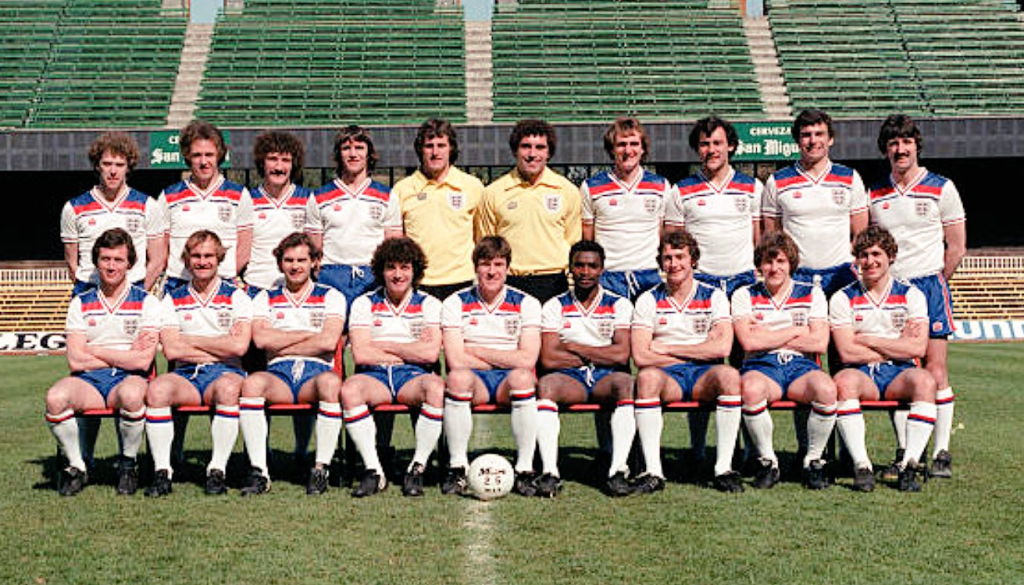
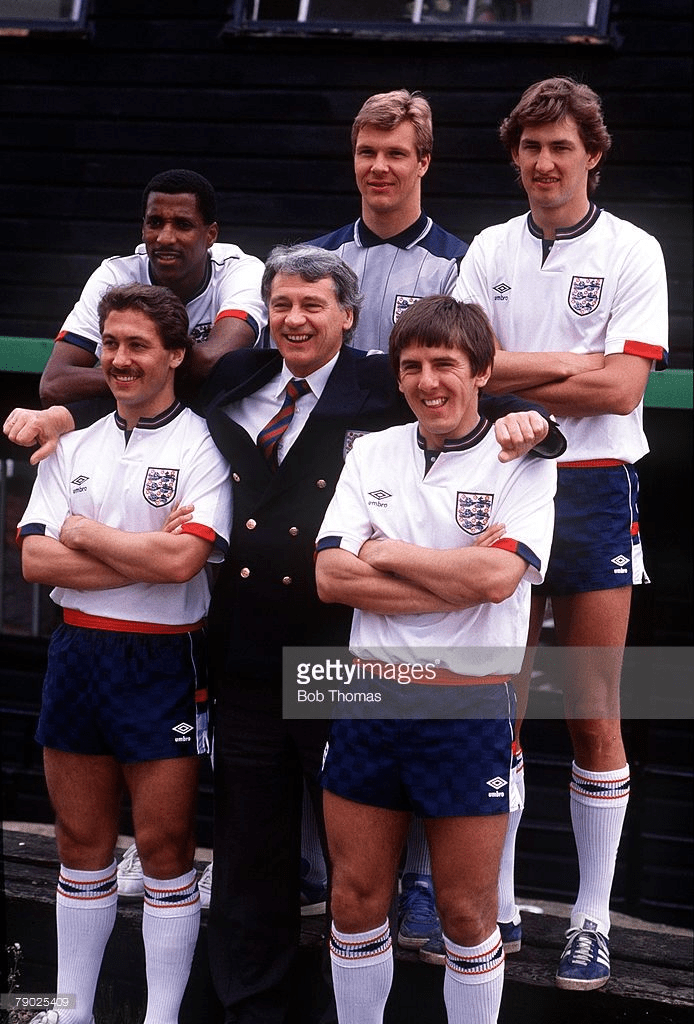
This was not the only change kit released, there was a 3rd kit in the same template. Regular readers and followers will know that this is my single favourite kit of all time and only got used in one U21 game, but we did get this wonderful Squad Picture of the Senior Team in this kit….. (so it had to be included)!

I have written a dedicated piece all about England in Sky Blue which you can find here.

These kits remain in place through 1989, were we got to see a couple of different kit mash ups, against Chile, white / white / red was used for the first time in 5 years!

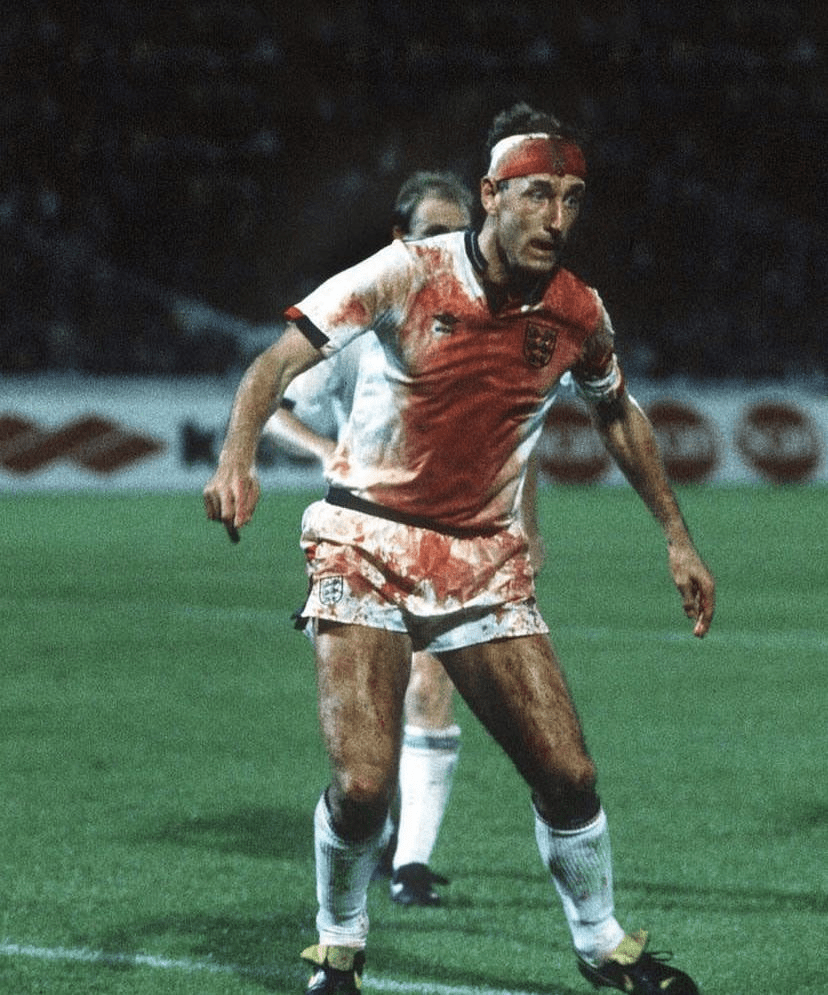
This was followed by All White look against Sweden, however this game will be more remembered for how Terry Butcher’s kit looked at the end of the game…!
Breakdown per year – 116 Games in Total

  • 1980 – 13 Games
    • 3 Primary Kit Variations
  • 1981 – 9 Games
    • 2 Primary Kit Variations
    • 1 Secondary Kit Variation
  • 1982 – 15 Games
    • 2 Primary Kit Variations
    • 3 Secondary Kit Variations
  • 1983 – 11 Games
    • 1 Primary Kit Variation
    • 1 Secondary Kit Variation
  • 1984 – 11 Games
    • 2 Primary Kit Variations
    • 1 Secondary Kit Variation
  • 1985 – 12 Games
    • 2 Primary Kit Variations
    • 2 Secondary Kit Variations
  • 1986 – 14 Games
    • 2 Primary Kit Variations
    • 1 Secondary Kit Variation
  • 1987 – 8 Games
    • 3 Primary Kit Variations
    • 1 Secondary Kit Variation
  • 1988 – 12 Games
    • 1 Primary Kit Variation
    • 2 Secondary Kit Variations
  • 1989 – 11 Games
    • 3 Primary Kit Variations
    • 1 Secondary Kit Variations

Well, that is the 1980s completed, 116 games in total, different kit looks and changes, four official primary and secondary kits used and even the introduction of 3rd Kits! I will return with a look back at the 90s soon!

Let me know your thoughts and comments below or over at @Kit_Geek and a reminder that the overall visual page of the England Kit History is now also live on the site here

Resources for this article / project

England Football Online

Historical Football Kits

True Colours – Volume 2 and International Kits

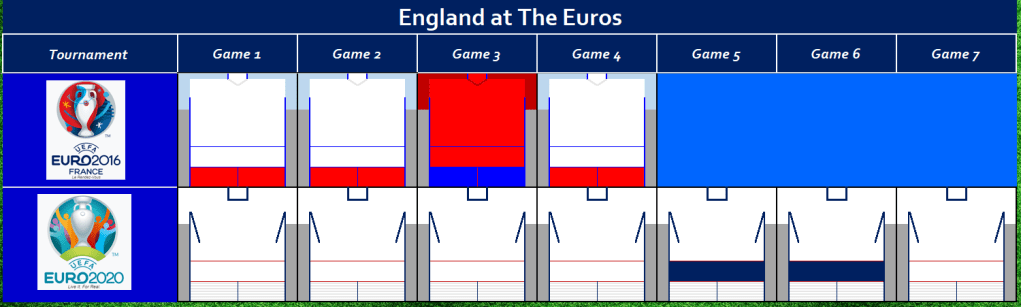
England & The Euros: Kit History

Euro 2024 is about to start, this is the 17th Euros Finals since they started in 1960 and will be hosted by Germany between 14th June and 14th July 2024.

The European Championship Finals have gone through several different formats since its inception, from just 4 teams for the initial tournaments up to 24 teams since 2016

  • 1960 – 1976, 4 Teams
  • 1980 – 1992, 8 Teams
  • 1996 – 2012, 16 Teams
  • 2016 – Onwards, 24 Teams

Here we have a look at the history of England’s Kits through out the competitions in preparation of this year’s tournament, I did something similar for World Cups originally in 2018 on this site – here and in more detail in Volume 5 of Kit Magazine for the 2022 World Cup.
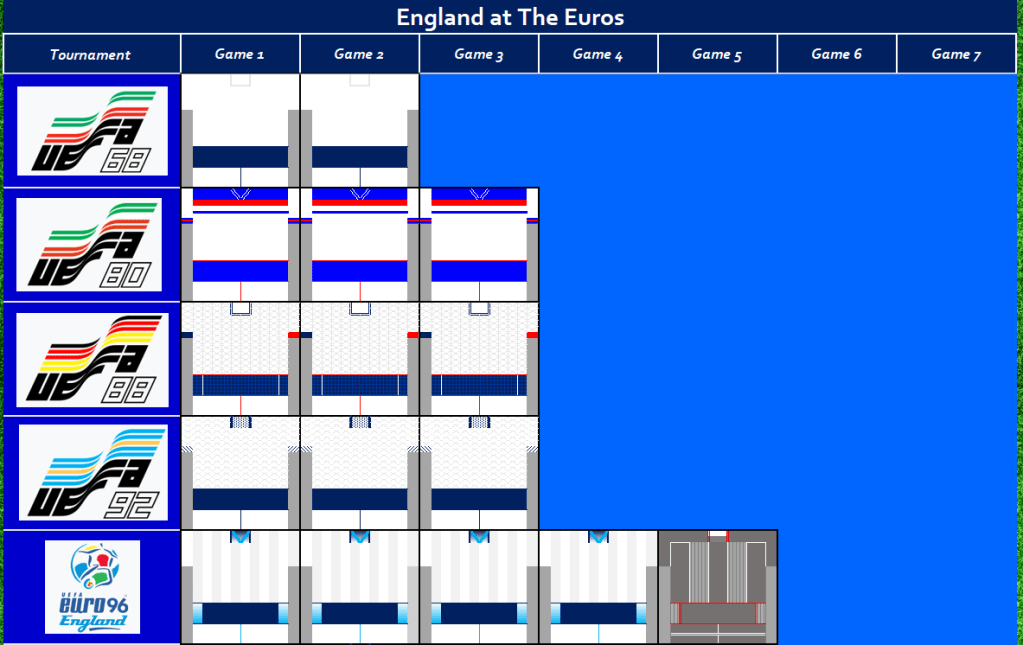
England have qualifed for 10 out of 17 tournments and played a total of 38 games through their finals appearences.

Kit Overview of Euros

4 Team Tournament: 1968

8 Team Tournaments: 1980, 1988, 1992

16 Team Tournament: 1996, 2000, 2004, 2012

24 Team Tournament: 2016, 2021

Tournaments in Detail

1968 – This was only tournament where there was four teams that England Qualified for and was hosted in Italy, as then World Cup Holders, the tournament consisted of two semi-finals and then 3rd/4th Playoff game and Final.. England losing in their Semi-Final against Yugoslavia and then beating The Soviet Union in the 3rd/4th Place game. The kit worn in both games was the same as the kit worn in 1966, the classic England look of that time!

1980 – The next time England qualifed for the Euros was in 1980 again held in Italy, and this was the first tournament that saw of an expansion of teams qualifed doubling to 8 Teams, with group stages added for the first time. England were in Group B, played all their group games in their classic Admiral Primary Kit most famously used in World Cup 82. With a win, draw and loss in the group it meant that England did not go past the group stage, so it was just the three appearences of the Primary Kit, it is also worth noting that the kit did not contain any Admiral Branding as it was not permitted in tournaments at this time.

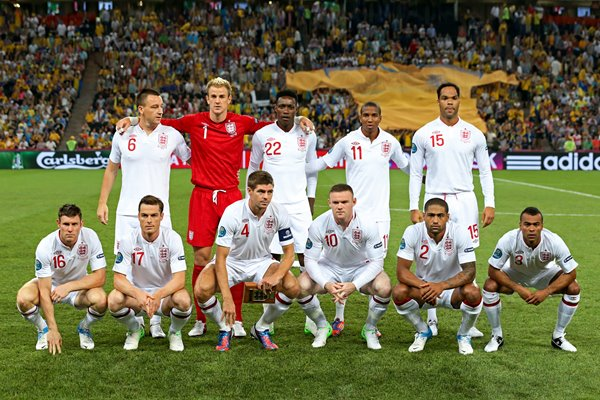
1988 – England followed a positive World Cup Campaign in 1986 by qualifying for 1988 Tournament in West Germany and England now in Umbro and will be in the Euros until 2016. It was not the most memorable competition on the pitch with three defeats in the three group games meaning they were rock bottom of their group, this probably reflects on the memories of the kit worn, they used their Primarty Kit in all three games and was one of the best Umbro Kits for The Three Lions and had Change and 3rd Kits in the same template.
1992 – The final 8 Team Tournament was also the first time that England qualifed for The Euros in consecutive tournaments, hosted by Sweden it was another campaign that England failed to go past the group stage however the team did manage to draw two games only losing against hosts Sweden which prevented their progression from the Group. It was another tournament that the Primary Kit was the only kit used, and was the same kit that was seen in World Cup ’90, this was the last time an England Kit was used in two major tournaments.
1996 – Euro 96 was the first of the next expansion of the tournament, with 16 Teams qualifying with 4 Groups of 4 teams and the introduction of Quarter-Finals for the first time. England were the Host Nation and coming off the back of failing to qualify for World Cup ’94 there was high expectation of the team to succeed on home soil.

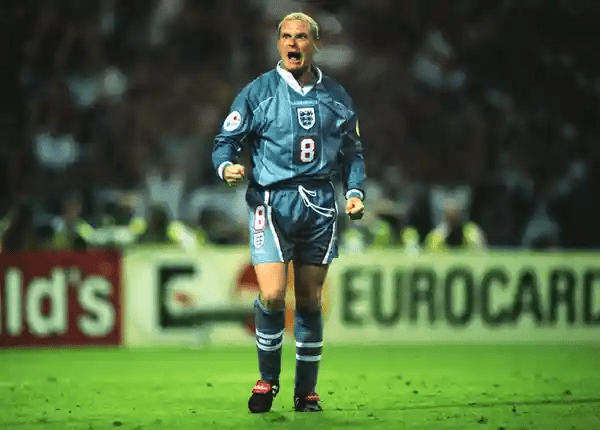
England finished top of their Group and qualifed for the knock out stages for the first time in the Euros. The Primary Kit from Umbro was one that introduced a turquoise blue accent to the kit for the first time and was worn in each of the group games and the penalty win against Spain in the Quarter-Finals.

The Semi-Final was the first time that England used a change kit in Euros History and the first time a change had been used by the team in any major tournament since World Cup ’82. It was one of the most well known kits in England Football History, the Indigo / Grey change kit was one has always drawn a lot of attention and been written about so much over the years… however this was its only tournament appearance.

2000 – Euro 2000 was the first Euros to be Co-Hosted, with Belgium and The Netherlands welcoming 14 other countries to their shores. England took to the new millennium in a classic look that called back to the 60’s in it’s design and remains one of the most under-rated kits worn by The Three Lions. The Primary Kit was worn in their opening group game against Portugal and their final group game against Romania, both ending in 3-2 defeats, which meant they did not progress to the knock out rounds.

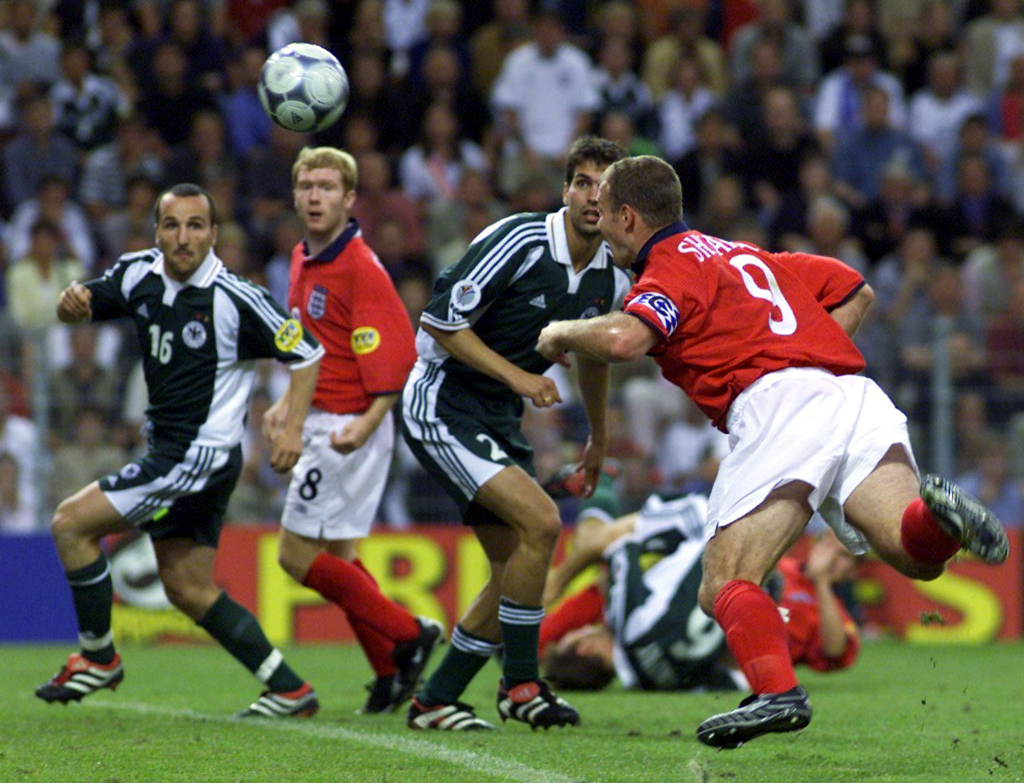
Their change was also used against Germany, who were also in their change kit for the game, this was the first time that England played in their traditional Red change colour in Euros Finals. The shirt itself is an interesting design being made of an almost wollen material, one that seems a world away for the structure of shirts made today.

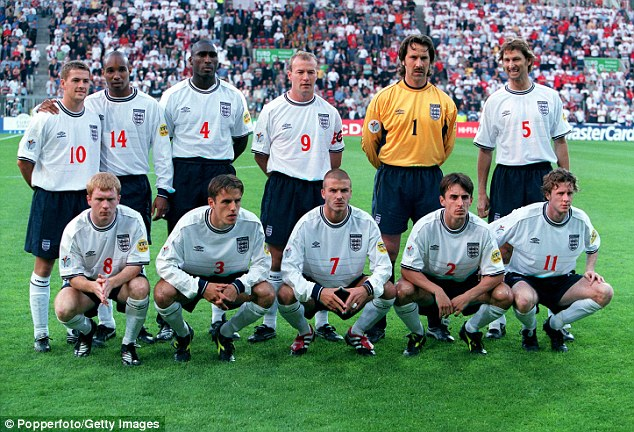
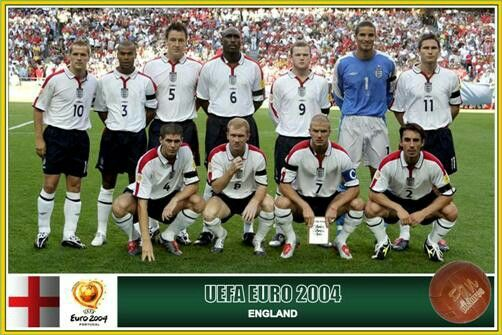
2004 – The following Euros was held in Portugal and was in the middle of the “Golden Generation” of England team, with high expectations of the team and their Manager Sven-Göran Eriksson. In the Group they wore their Primary Kit twice and Change Kit once, qualifying from their group for the 2nd time they also wore their Primary Kit in their Penalty defeat against Hosts Portugal.

The Umbro Kit contained a lot more red then seen before, with red shoulder / sleeve taping on the shirt, this was the first England Kit that added a “Star” for their World Cup Victory in 1966, however it was placed on the sleeve of the shirt, not above the crest as normally place. It was also marketed as a reversable shirt, with the reverse being a leisure shirt alternative.

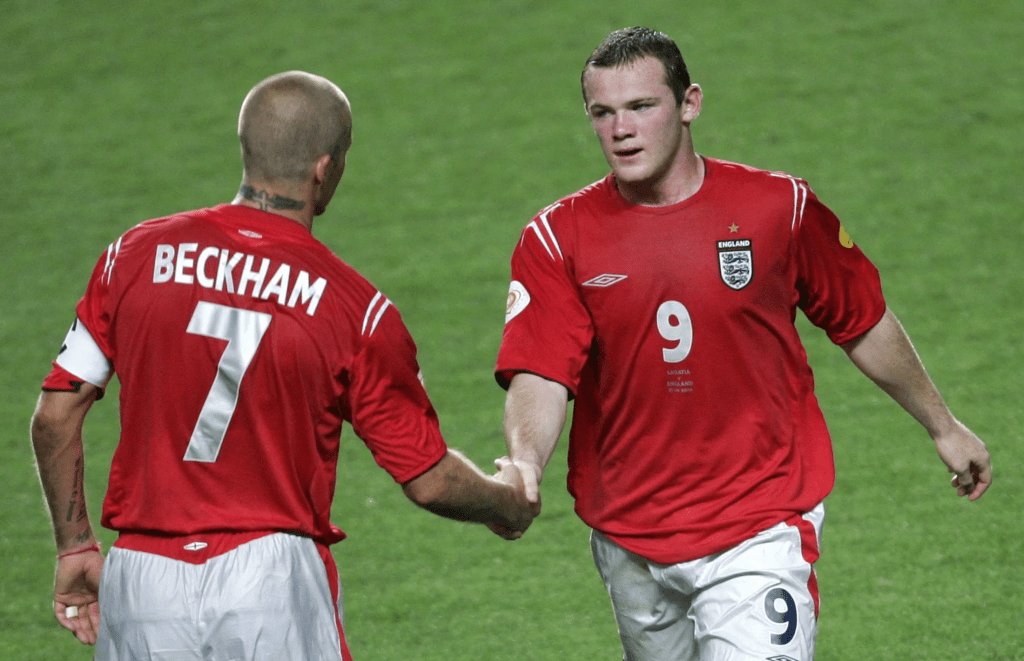
The Change Kit worn against Croatia was again the traditional red shirt but was paired with silver shorts and silver detailing, it also contained “playful” takes on the St.George’s Cross on the shoulders, with a design with paid tribute to the fans with flags drapped on their shoulders.

2012 – England failed to qualify for the 2008 tournament, so their next appearence was in 2012 in the competition hosted by Poland and Ukraine. This was also the final tournament that the team would be wearing Umbro as their Kit manufacturer and it was a new take on their Primary Kit for this tournament.

The kit being all white for the first time in it’s default look, in fact with the National Crest, logo and nameset all in red, there was no navy in the kit at all, also paired with a complementary goalkeeper kit in all red! This Kit was worn in the opening and closing group fixtures as well as the penalty defeat against Italy in the Quarter-Finals.

The Change kit worn against Sweden was another move away from the traditional red, with an All Navy Kit as part of the Tailored by Umbro range, although the default look was with Sky Blue Shorts it was the all navy when it came to an alternative look needed, this was the first time that England wore an alternative look in Euros Finals in their 24th game.

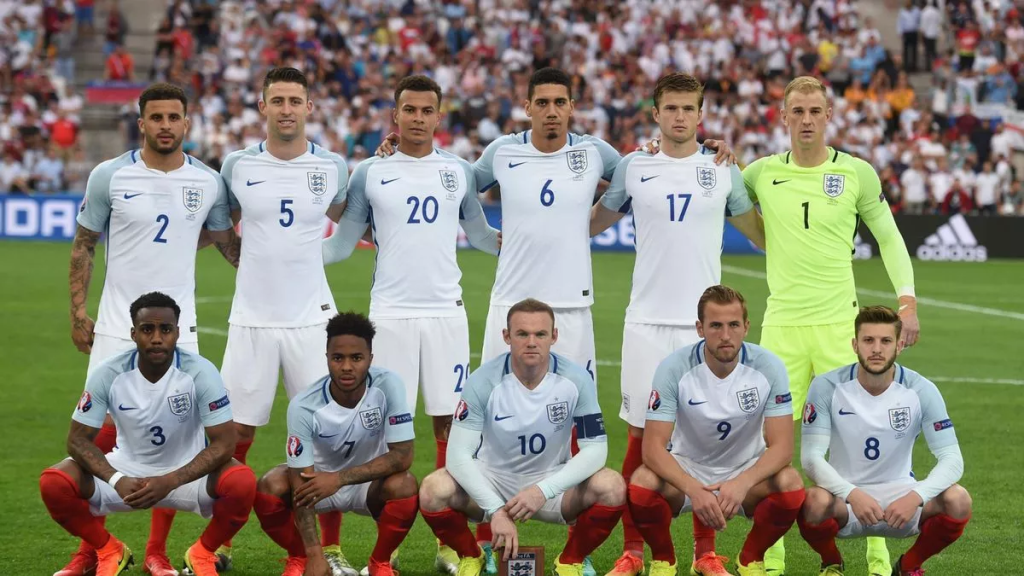
2016 – It was time for change again in Euro 2016, the teams qualifying increased to 24 with 6 Groups of 4 teams and the introduction of Last 16 Knock-out round, meaning teams getting to the final would play a total of 7 games, the same as World Cups. it was also change on the Kit front for England, with Nike now being the kit supplier for their 2nd Major Tournament after the World Cup 2014.

The Primary kit being one of the more controversial kits of The Three Lions’ Kit History, the Nike Vapor Template was a kit look that was paired with contrasting socks, in England’s case it was red socks… with Sky Blue sleeves, this was big change that not all fans were happy with!

For me, I love this kit, I love this template, it’s adventurous and challenges the standard designs!

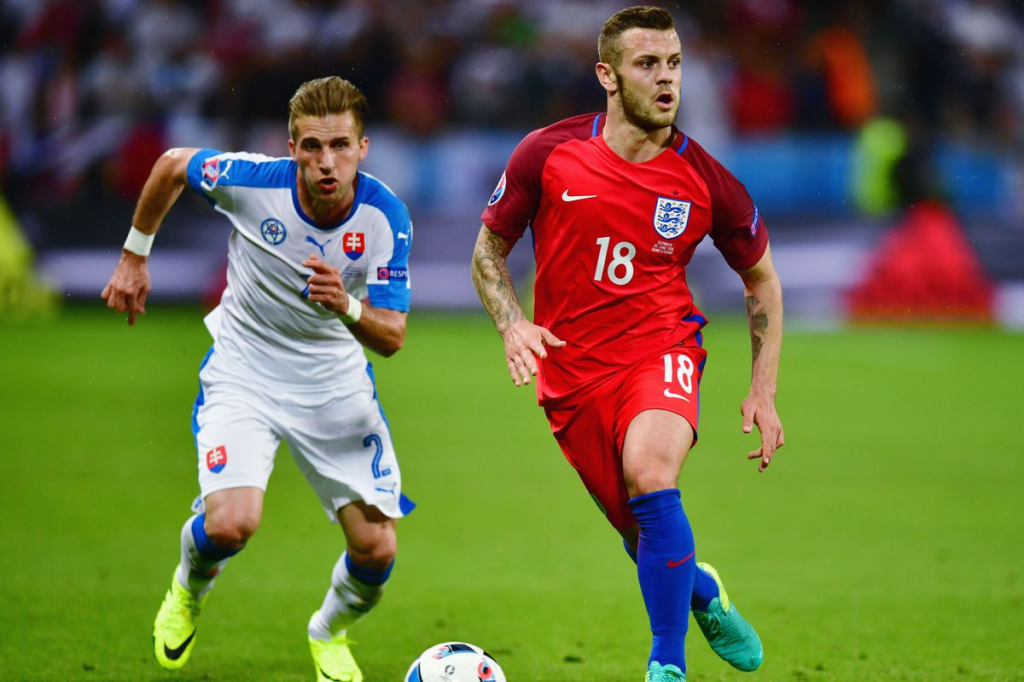
The Primary Kit was worn in two of the group games and the shock defeat in the Last 16 game against Iceland, their Change Kit was worn against Slovakia which is the same template as the Primary in red and blue.

2020 – Due to the Covid Pandemic the 2020 tournament was postponed one year, so took place in 2021 and was held across Europe with 11 Countries / Cities hosting games, celebrating 60 years of the Tournament. England hosting games across the Group Stages and Knock-out rounds including both Semi-Finals and Final all at Wembley Stadium.

England, again with Nike went for a more classic look for their Kit, with Navy Blue shorts paired with a classic looking shirt and rounded collar, also a return of a central Crest for the first time since 2004.

England however did use alternative white shorts in all of their Group Games and contunied the All White look into their Knock-Out Last 16 game against Germany, it was not until the Quarter-Final match against Ukraine that they wore Navy Shorts, which would be for the first time in the Euros Since their Quarter-Final defeat against France in 2004, 17 years earlier. The same look was used in their Semi-Final victory against Denmark.

In the Final against Italy, it was a return to All White again, meaning they wore their Primary Kit through-out the tournament’s 7 Games, the first time a change kit was not worn by England in The Euros Finals since 1992.

Again, a final look at all the Kits worn in the 10 Tournaments and 38 Games of England at The Euros over the past 56 Years

  • Primary Kits: 33 (28 Default, 5 Variations) – 87% Kit Usage
  • Change Kits: 5 (4 Default, 1 Variation) – 13% Kit Usage

There we have it, let me know your thoughts and comments about England at the Euros over at @Kit_Geek

Kit History: Crystal Palace

UPDATED TO INCLUDED 2024/25 SEASON

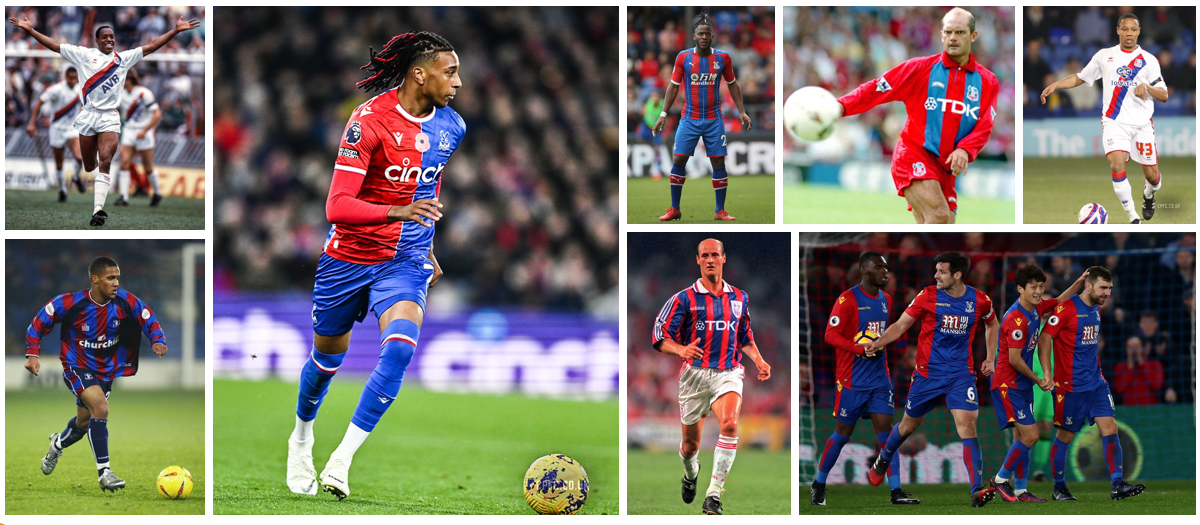
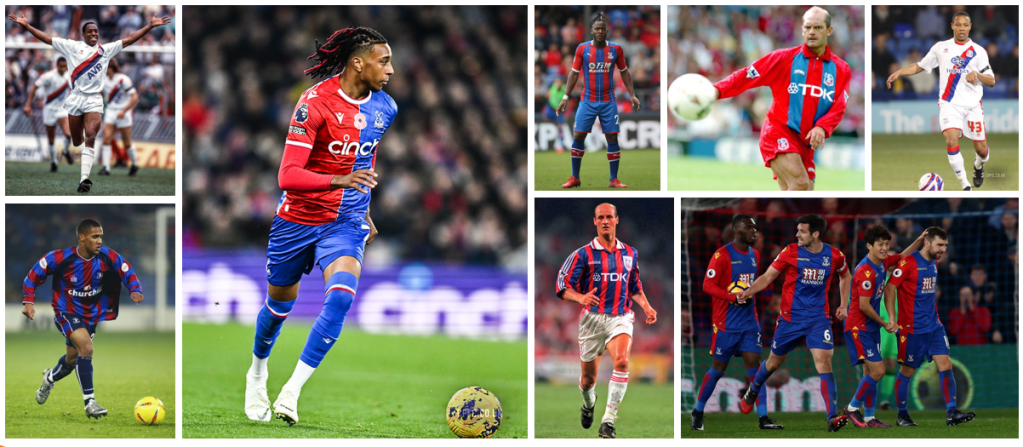
This is the first in what I hope is a new feature on the Kit Geek Site, where we take a deeper look into the Kit History of one club, the manufacturers, the kits, the highs and lows over the years. Most of these reviews with start from 1970’s where Kit Manufacturer details become more prevalent in kit design and for the moment will only look at the club’s Home Kits (maybe change kits will come in the future).

The first club I want to take a look at is Crystal Palace, the reason for this is that over the years The Eagles have adorned kits from almost every major (and some minor) kit makers out there so the perfect club to kick start this series!

Kit History Overview

  • Umbro – 1975 to 1977
  • Admiral – 1977 to 1980
  • Adidas – 1980 to 1984
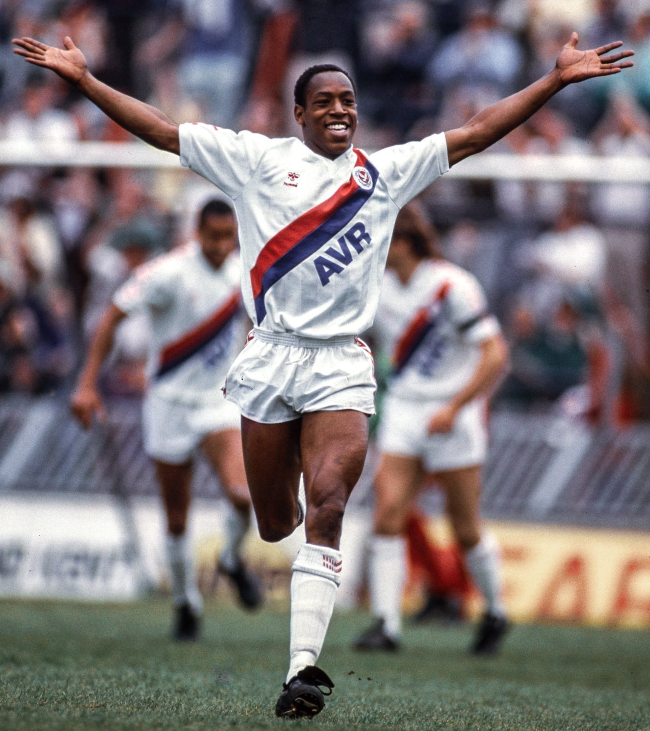
  • Hummel – 1984 to 1987
  • Admiral – 1987 to 1988
  • Bukta – 1988 to 1992
  • Ribero – 1992 to 1994
  • Nutmeg – 1994 to 1996
  • Adidas – 1996 to 1999
  • TFG Sports – 1999 to 2001
  • Le Coq Sportif – 2001 to 2003
  • Admiral – 2003 to 2004
  • Diadora – 2004 to 2007
  • Errea – 2007 to 2009
  • Nike – 2009 to 2012
  • Avec – 2012 to 2014
  • Macron – 2014 to 2018
  • Puma – 2018 to 2022
  • Macron – 2022 to current season

That is a staggering 19 changes in Kit Manufacturer, with 15 different Kit Makers over a near 50 year period, so you can see why Crystal Palace was the best place to start for a look at a club’s Kit History.

Umbro – 1975 to 1977

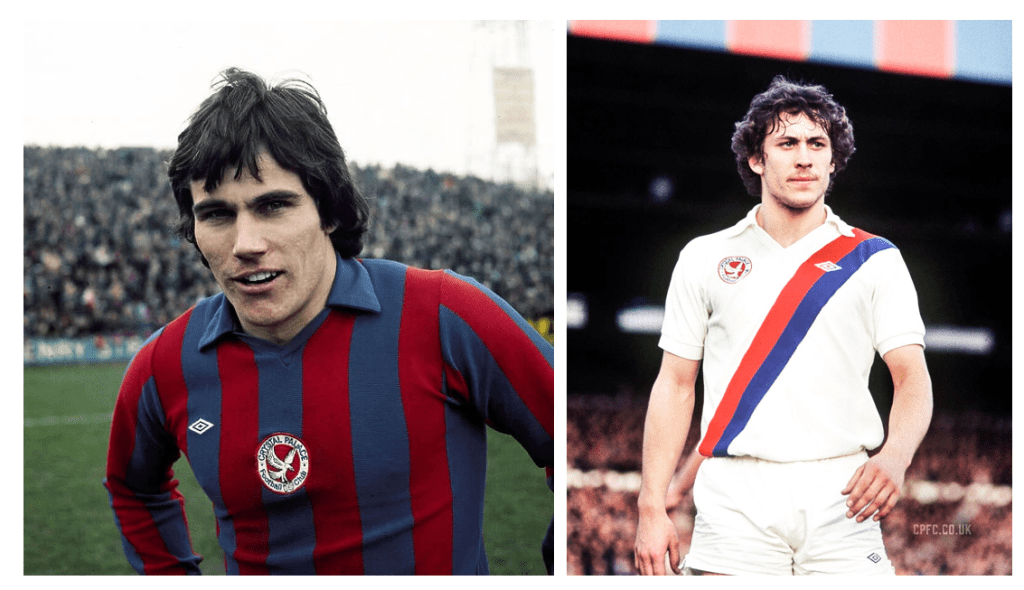
The first brand to be visible on the shirts was Umbro, in the two seasons that Classic English Manufacturer provided Kits we saw the two classic looks that The Eagles are most famous for, the red / blue stripes and the wonderful white sash kit, introduced for the first time by Manager Malcolm Allison in the 1975/76 season. Something to note would be the placement of the crest and logo on the Sash Shirt, being reversed from it’s traditional placement.

Admiral – 1977 to 1980

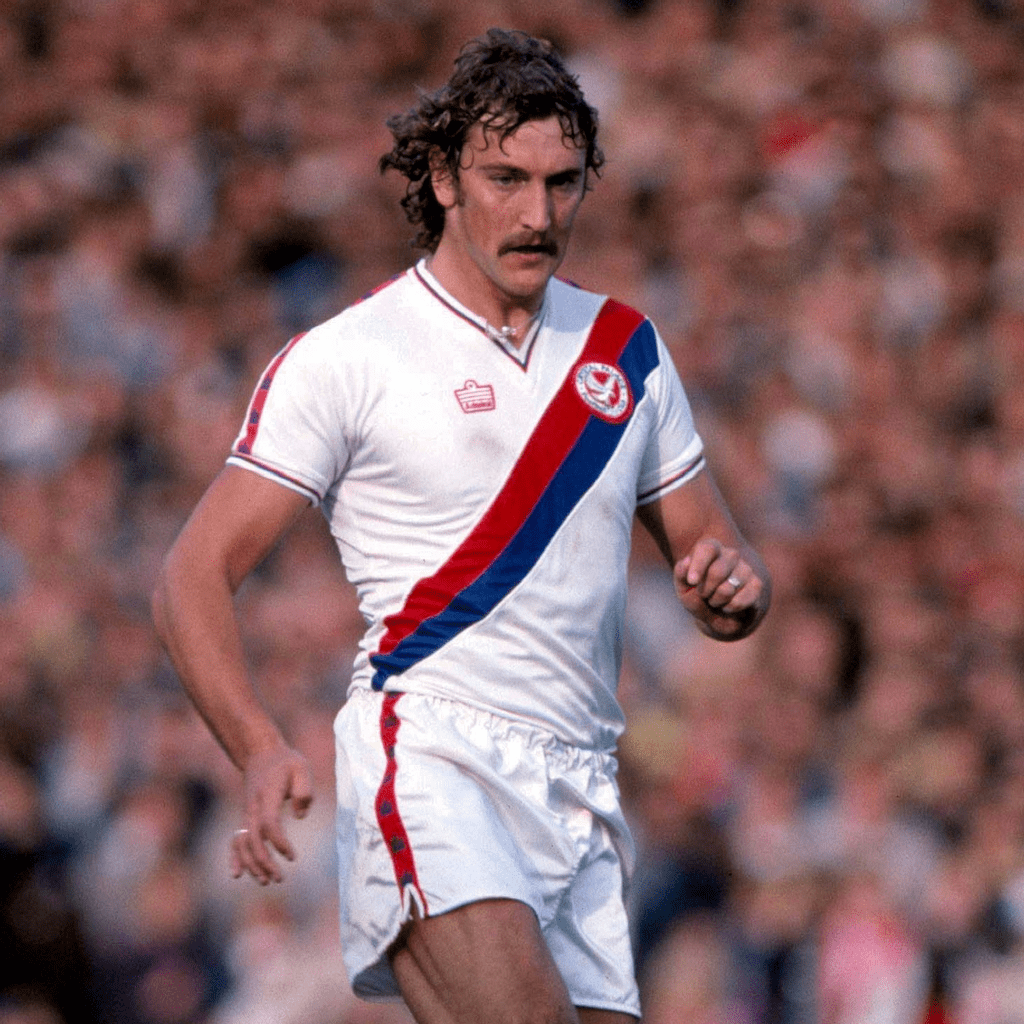
The next Kit Manufacturer was Admiral, this would be the first of three times they would provide Kits for Crystal Palace over the years. In this period there was very little change to the look of the Kit over the three seasons, again it was the Sash Kit to be used as the Home Kit which this time included the classic Admiral Taping on the sleeves, there were some variants of shirts with different locations of the Brand Logo.

Adidas – 1980 to 1984

For the start of the 1980/81 season it was Adidas who became the Kit provider, one of three manufacturers to have more than one stint for the club. They provided kits for four seasons in total, with the first three following the sash look, meaning this kit look was used for seven seasons in a row before a return to red and blue stripes in 1983/84, the final season for this Adidas run!

Hummel – 1984 to 1987

It was now Danish (well German / Danish) company Hummel to take the reins from 1984 and it was return to sash kit as the Home Kit, with the classic Hummel Chevrons on the sleeves. Through-out the three seasons, there was no change to actual kit, however there was a change of sponsorship during this time, which each of the three seasons having three slightly different looks, 84/85 had no sponsorship… however it is the 86/87 version that I am drawn to the most, with an interesting and unique sponsor placement on the shirt.

Admiral – 1987 to 1988

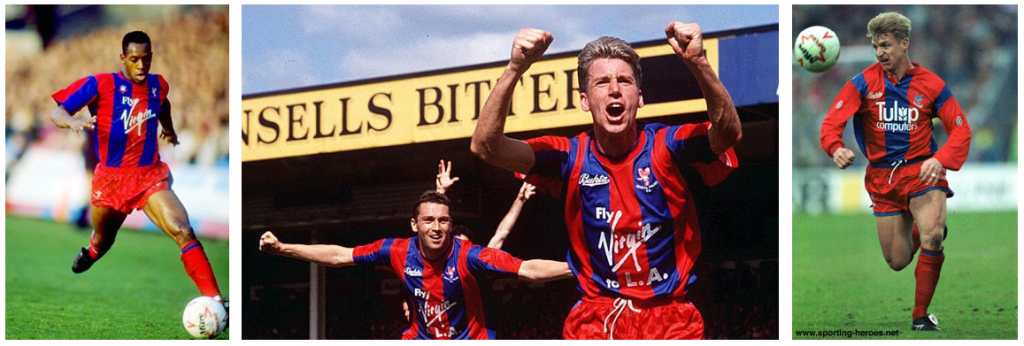
The return of Admiral for their second time in supplying kits also brought a return to Red / Blue Stripes as the Home Kit look, a change from their previous incarnations of this look though was in the shorts and socks, with Red being the first choice colour for these elements of the kits. Although Admiral only returned for a single season, there appears to be two sponsors used in this season, with the second of these being a classic Crystal Palace Sponsor, Virgin Airlines with their tagline “Fly Virgin”.

Bukta – 1988 to 1992

Bukta became the fifth Kit Manufacturer for The Eagles, and this provided a couple of kits over the four years… with a slight change in the kits between 1988 and 1990, with the Bukta Brand Logo being updated between these two seasons, the second kit seen gave us a change in the order of the stripes, with Blue being the central stripe from 1990/91 season, the first time since the Mid 70s.

Ribero – 1992 to 1994

A rare occurrence happened in December 1992, when Ribero took over from Bukta in supplying the kits mid-season. However the first kit, there was minimal chanage to the previous 92/93 shirt, with some change to design of the shorts / socks. The following season, saw what was the only Ribero designed kit produced for the club, with a return of red being the central stripe!

Nutmeg – 1994 to 1996

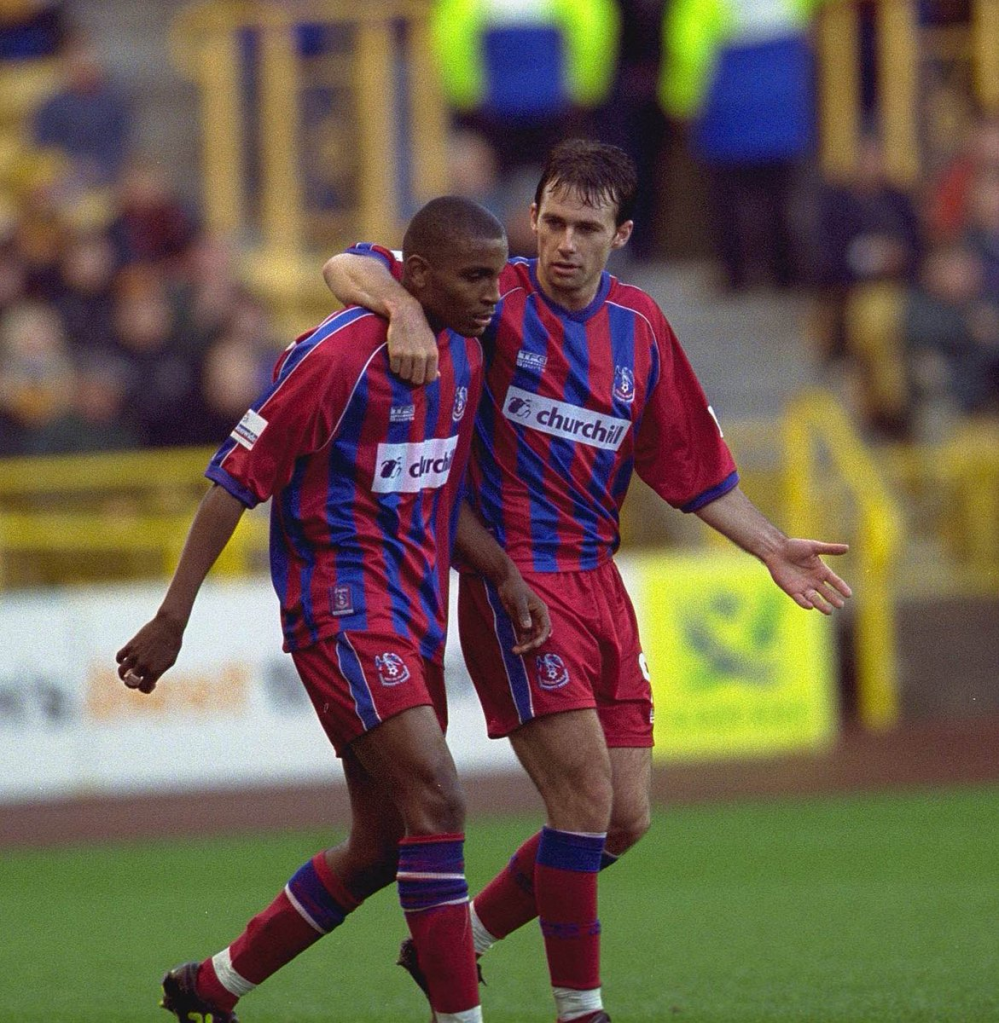
Another 90s Brand was used for two seasons, from 1994… in their first season Nutmeg changed very little from the previous kit incarnation but their second kit from 95/96 season was a shift in look and design, firstly introducing white trim to the central red stripe but also had the blue strips fade into the overall red look of the shirt, there was also an interesting placement of the manufacturer logo, which being below the sponsor also meant is was on the navel of the players!

Adidas – 1996 to 1999

The return of Adidas for Crystal Palace, provided two very distinctive and two very different looks not seen yet in the club’s history.

The first kit was used for two seasons between 1996 / 1998 and saw a return to slimmer more standarised red and blue stripes, although not new for The Eagles, this kit was paired with white shorts and socks in its look (The shirt being the same one one worn by Adidas Giants Bayern Munich in 96/97 season).

The second kit, worn in 1998/99 season saw a predominantly red kit, with just blue side panels and white Adidas stripes heavily featuring in the kit.

TFG Sports – 1999 to 2001

TFG Sportswear, a South Africian sportswear manufacturer were the kit makers through the turn of the century for Palace. They provided kits for two season, but it was just the one home kit used through that time and was a return to a more classic red / blue striped shirt paired with red shorts and socks, this was the last time a kit was used for more than one season by the club.

Le Coq Sportif – 2001 to 2003

The Classic French Manufacturer was next to provide kits, again for a two year period, however this time we did see two different kits in these two seasons.

The 2001/02 shirt had red sleeves being used along with red shorts and red socks containing a large blue band and cuffs, to provide a balanced look.

The 2002/03 version was a very different look, with navy blue being added to the colour palette. There were blue sleeves on this shirt but shorts and socks were navy blue with red / blue details.

Admiral – 2003 to 2004

The return of Admiral for their third and final stint as Kit Provider, however as in their previous return it was for the single season but this gave us one of the most interesting in overall design for a Home Kit in the Club’s History.

Mantaining the use of Navy Blue in the kit from the previous season, the red and blue striped shirt added navy in the shirt’s side panels but also introduced red and blue stripes in the shirt’s sleves and into the shorts trim, add some white pipping and there is a lot going on here, but I will be honest one of my favourite kit looks for The Eagles!

Diadora – 2004 to 2007

The Tenth Kit Manufacturer on our list, is Diadora with the Italian company providing kits over three season, with a new look for each season!

Navy being ditched (well apart from the collar) in the 2004/05 Kit, for a return for a more classic Crystal Palace look.

In 2005/06 the predominance of blue was the choice of design with thicker central red stripe and red side panels, the final Diadora Kit was a return to red shorts and socks, but the thicker stripes remained with blue being the central stripe here.

It is also worth mentioning that Diadora also produced a fourth Home Kit design, this one was the Centenary Celebration Kit worn a handful of times in 2005, which was inspired by the colours first use by the club (claret and blue) with another classic all white look used by The Eagles.

Errea – 2007 to 2009

Another Italian maker was next to be provide Kits for Palace. Errea was used for two seasons, the first providing a unique take on the red and blue stripes, with the stripes being of different lengths to give the illusion of inverted triangle within the shirt’s design.

For the 2008/09 it was a return to the Sash Kit as the first choice Home Kit the first time since 1986/87 season 21 years earlier, with nice use of red / blue trim in the shorts and socks. Although appearing several times as a change kits design option, this is the last time the look has been used as the Home Kit.

Nike – 2009 to 2012

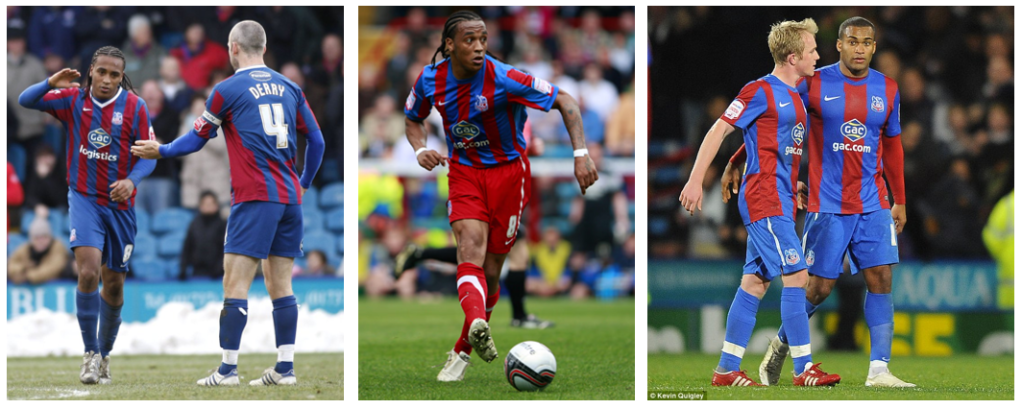
It was Nike’s turn to provide the Kits in 2009. Over the three seasons they supplied Crystal Palace, it was very much Teamwear kits on show.

The 2009/10 version was paired with blue shorts and socks, in the shirt there was no central stripe this time something not seen before from what I can tell, the white collar did also add something slightly different to look here.

In 2010/11 season red short and socks returned, along with the central stripe on the shirt, this was the last time that red shorts and socks have been used as first choice.

The 2011/12 Kit bounced the blue shorts and socks back, the shirt also returned thicker stripes with a jagged pattern to them.

Avec – 2012 to 2014

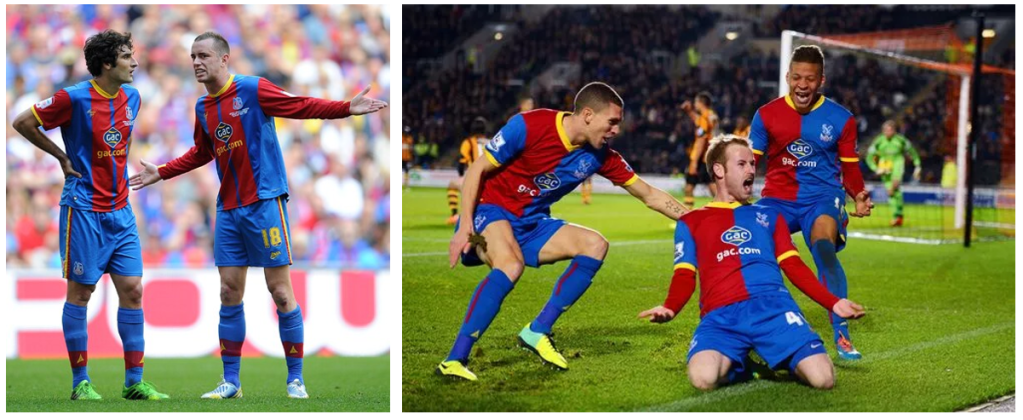
The Kits between 2012 and 2014 were interesting, although produced by Avec they did not carry the manufacturers logo on the shirts, only on shorts and socks.

The 2012/13 version had “Founded 1905” in place of the logo, and provided a design that containted two thick red stripes, with red sleeves and introduced yellow as a trim colour through-out the kit, the stripes in this shirt are influenced from the shirts from the earlier 70’s which used the same style of thick stripes.

The second kit produced provided a first in the club’s history with a halved red and blue shirt whilst maintaining the yellow collar, with adding yellow cuffs for the first time.

Macron – 2014 to 2018

Another Italian Kit Manufacturer in Macron became provider in Summer of 2014 and would supply kits for the next four seasons, with new kits in each of these.

2014/15 continued the recent trend with yellow detailing / trim but returned to a more classic red and blue striped kit.

2015/16, again saw the removal of a central stripe to give an appearence of almost a halved shirt with alternate red and blue sleeves.

2016/17 was another change in look, this time it was almost an Ajax style kit in it’s design, with blue making the body of the shirt flanked with red side and sleeves,

The final Macron Kit in this run in 2017/18 went back to classic stripes, with a blue central stipe, all four kits being paired with blue shorts and socks.

Puma – 2018 to 2022

Crystal Palace completed being supplied by the “Big Three” Kit Manufacturers when Puma supplied their kits, another four year deal with four Home Kits over the four seasons but four very different looks used.

2018/19, an interesting design with the red stripes fading into the blue to blend into the blue shorts, yellow remained as the trim colour within collar and cuffs.

2019/20, another new element introduced into the kit, with a white pinstripe added to the blue stripes to give a classy look to the shirt, a nice pair socks also added to the overall kit look, working with the overall kit balance.

2020/21, white was removed from the kit (aside from logos), and the red central stripe returned for the first time in 10 years but this time the stipes were used to create a central point, with blue sleeves and chest panel… using the stripes in another way that worked well.

2021/22, the most radical of the Puma designs, with a diagonal take to the stipes paired with red sleeves.

Macron – 2022 to current season

Marcon, the third manufacturer to have more than one stint as kit makers for Crystal Palace returned in 2022.

2022/23 Kit provided another interesting take on stripes, with “scribbled” effect working well and giving us something new in it’s design.

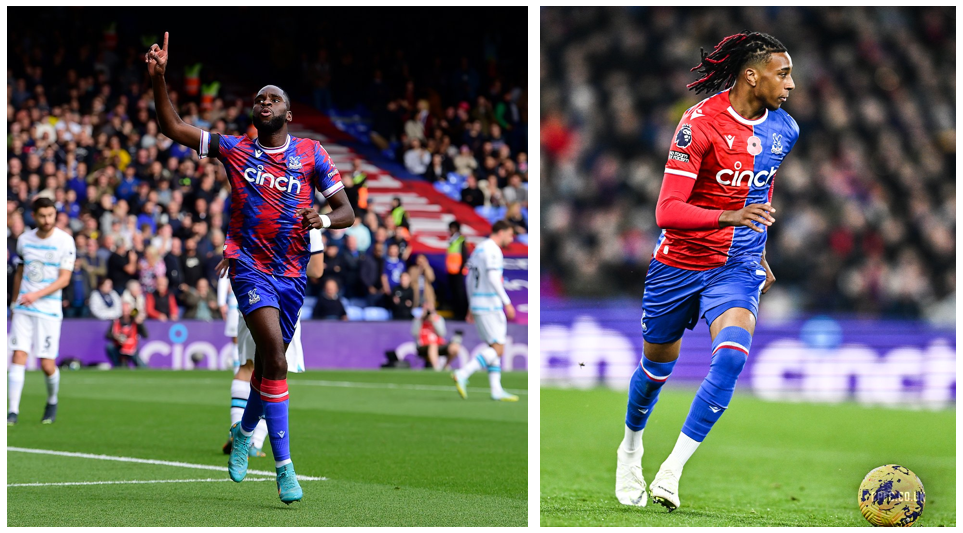
That finally brings us to this season’s kit, and a return to a halved shirt after ten years since its first appearence in their Home kit design, this shirt contains some fantastic detailing of the design of the Original Crystal Palace building and one of my favourite Home Kits in the Club’s history.

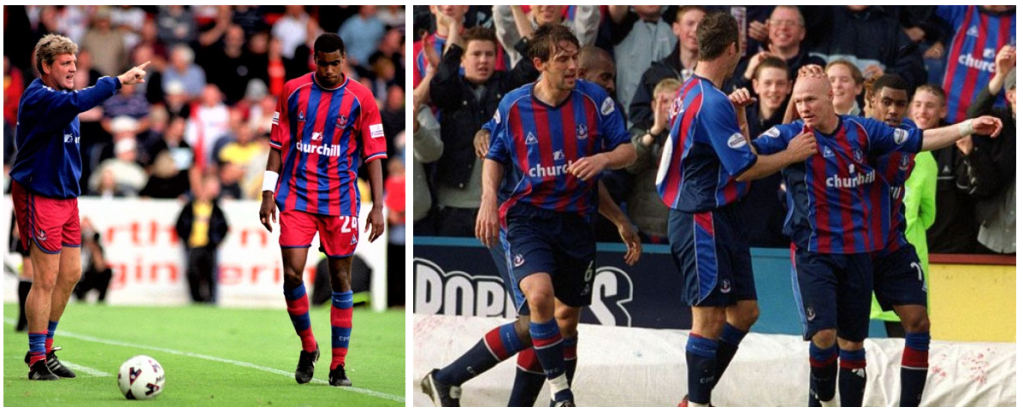
2024/25 – Macron have delivered some interesting designs in their second spell with the club and the 24/25 Kit is the most “out there” effort, combining the traditional red and blue stripes with a repeating pattern of the Club’s Eagle crest, the pattern also is used in the shorts and the overall design gives a feather effect into the kit, a brave choice but one that I think works well, it stands out and is something a little different, whilst maintaining the club colours.

There we have it, 49 years, 41 kits, 15 manufacturers… what are you favourite Crystal Palace Kits from over the years and what clubs would you like to see feature in future Kit History Deep Dives, let me know at @Kit_Geek or in the comments below.

As part of my research of this article I used the following for sourcing information:

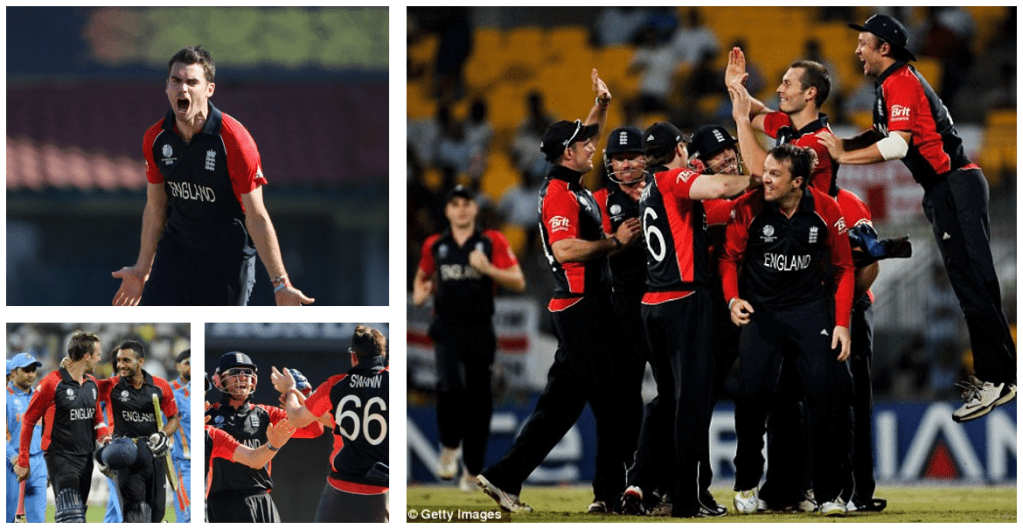
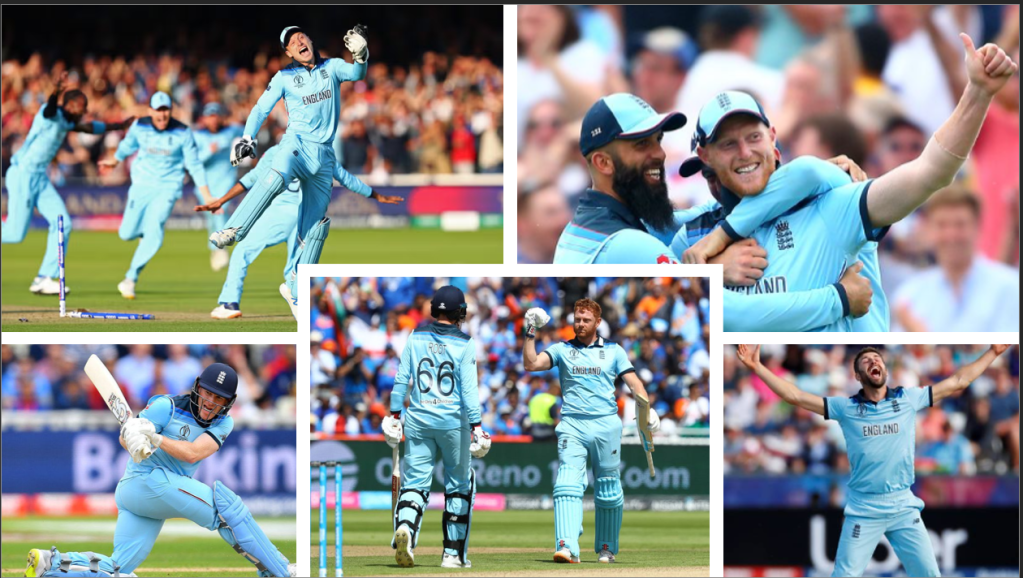
Cricket World Cup: England ODI Kits

The 13th Cricket World Cup will be “kicking off” on Thursday 5th October, being held in India who are hosting the tournament on their own for the first time, previously “Co-Hosting” in 1987, 1996 and 2011.

England will be kicking off the competition at Narendra Modi Stadium in Ahmedabad where they will play New Zealand, who they beat by the “barest of margins” in the 2019 Final.

I want to take some time to look at the “ODI” (One Day International) colours worn by England through-out the tournament’s history, from 1992 up to the current 2023 competition and will rate each kit out of 5 Stars!

1975 to 1987

First, a quick overview of the those earlier tournaments, there were four competitions here with England hosting the first three (1975, 1979, 1983) and India / Pakistan hosting in 1987, These tournaments were all completed with Countries wearing the traditional whites, with the England Team barely changing their look over these 12 years!

1992: Australia / New Zealand

Welcome to modern cricket, coloured clothing, the return of South Africa, new ways to calculate rain effected matches… the Cricket World Cup was about to change!

The Biggest Change was the introduction of coloured kit for each country, there was a nice uniformity to the kit with all countries having the “rainbow” element across the shoulders of the shirt and names were introduced to the back of players shirts. The shirts were produced by Australia Manufacture Hogger Sports.

Each Country was a different colour and England were in Sky Blue, a colour used before the country in their tours of Australia and the ODI Competitions on those tours of the late 80s and early 90s.

England CWC Performance:

  • Runners Up
  • 2nd in League Phase (9 Countries)
  • Total Games – 10 (6 Wins, 3 Lost, 1 No Result)
  • ODI Kit Rating – ⭐⭐⭐⭐⭐

1996: Pakistan / India / Sri Lanka

The second Cricket World Cup that saw a uniformity in the kit design of coloured clothing, with all Twelve (increased from 1992) Countries in the same “Template” with each country in it’s own colour. Again a “Rainbow” element was part of this design, this kits were produced by Rolex Hosiery a Delhi based clothing company and Wills was a brand of cigarettes made by the India Tobacco Company who sponsored the 96 World Cup – thank you to Andy Rockall (@Statto_74) for this information.

England had a darker shade of Blue for this tournament not quite a Royal Blue but certainly darker than England had been seen in before with coloured cricket clothing becoming more and more common place in the International matches, again there were player names on the shirts.

England CWC Performance:

  • Quarter-Finals
  • 4th in Group B
  • Total Games – 6 (2 Wins, 4 Lost)
  • ODI Kit Rating – ⭐⭐⭐⭐

1999: England / Wales / Scotland / Ireland / Netherlands

The Cricket World Cup returned to England but this time with 5 Countries in Total hosting games across Europe. The 1999 Tournament was the final time that there was just one company making all the kits for the 12 countries participating in this competition, with Asics. The Japanese sports manufacturer produced bespoke kits for all Nations, each using elements of their National Crests into the shirt desgin.

Another first in Cricket World Cup History was Squad Numbers, which paired with player names on the shirts were used in this tournament, the numbers used were just 1-15 (as we see in Internation Football tournaments), rather than the free for all with numbers we see now.

England’s blue kit was another shade of blue, not as dark as the previous World Cup but it was the first time red was included in the kit as additional detail, something that would be part of the England kits for the next 12 years in World Cups.

England CWC Performance:

  • Group Stage
  • 4th in Group A
  • Total Games – 5 (3 Wins, 2 Lost)
  • ODI Kit Rating – ⭐⭐⭐

2003: South Africa / Zimbabwe / Kenya

2003 Tournament was the first to be held in Africa and became the first tournament when countries could use their own Kit Suppliers in the competition, as well as players using their own numbers from ODI Cricket, so numbers 1-99 could be used by players.

Another first was that the Country names appeared on the front of the shirts, something seen in tournaments to this day and probably linked to the introduction of sponsors being front and centre of cricket playing shirts (as we see in football), having the country name across the chest and sponsor moving to the sleeve, reduced the visibility of sponsors to International Shirts.

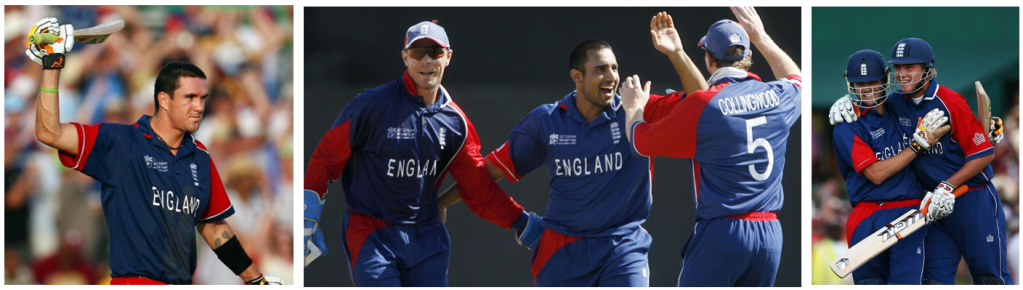
England had moved on from Asics and were supplied by Admiral, the first time Admiral had supplied kits for England in a World Cup since the football team in 1982! A return to darker blue, probably the darkerst blue used up to that point by the team.

England CWC Performance:

  • Group Stage
  • 4th in Pool A
  • Total Games – 6 (3 Wins, 3 Lost)
  • ODI Kit Rating – ⭐⭐

2007: West Indies

The Cricket World Cup Circus moved to The Caribbean for the first time and it was the second tournament where the England ODI kit was supplied by Admiral, meaning the classic football kit manufacturer made more appreances in the Cricket World Cup than the Football World Cup for the English National Team.

The red of this kit was a more prominent feature of this kit’s aesthic increasing more the previous two incarnations, this kit was paired with asymmetric red sleeves and trousers.

For me the most dull ODI Kit seen in World Cups for England and what would be the end of the England x Admiral Relationship.

England CWC Performance:

  • Super 8 Stage
  • 2nd in Group C
  • 5th in Super 8 Group
  • Total Games – 9 (5 Wins, 4 Lost)
  • ODI Kit Rating – ⭐

2011: Bangladesh / India / Sri Lanka

In the years between 2007 and 2011 World Cups the England team moved kit manufacturers and were now with Adidas, not necessarily known for the work in the cricketing world but produced some wonderful kits for the team, including a shift to a very dark shade of blue, a colour which was worn in the team’s first victory in an ICC International Tournament winning the T20 World Cup in 2010.

For this World Cup which returned to the Asian Continent, the dark blue was paired with Red Sleeves providing a new look in design for the English Team and one of the best seen in The Cricket World Cup.

England CWC Performance:

  • Quarter-Finals
  • 3rd in Group B
  • Total Games – 7 (3 Wins, 3 Lost, 1 Tie)
  • ODI Kit Rating – ⭐⭐⭐⭐

2015: Australia / New Zealand

The pattern of going darker and darker with the shades of blue used by the English Team was broken in the 2015 Tournament in Australia and New Zealand, with a return to Royal Blue shirts, not seen since 1999. Again partnered with Adidas, the shirt also included a pattern of one the “Three Lions” of the National Crest, similar to what we have seen with 1992 England Football 3rd Shirt.

However, there was a change to overall look with the shirt paired with navy trousers and caps, to provide an overall two-tone blue ODI Kit, something not seen before in World Cups for team, another win for me of the England x Adidas years, in their final collaboration for World Cup ODI Kits.

England CWC Performance:

  • Group Stage
  • 5th in Pool A
  • Total Games – 6 (2 Wins, 4 Lost)
  • ODI Kit Rating – ⭐⭐⭐

2019: England / Wales

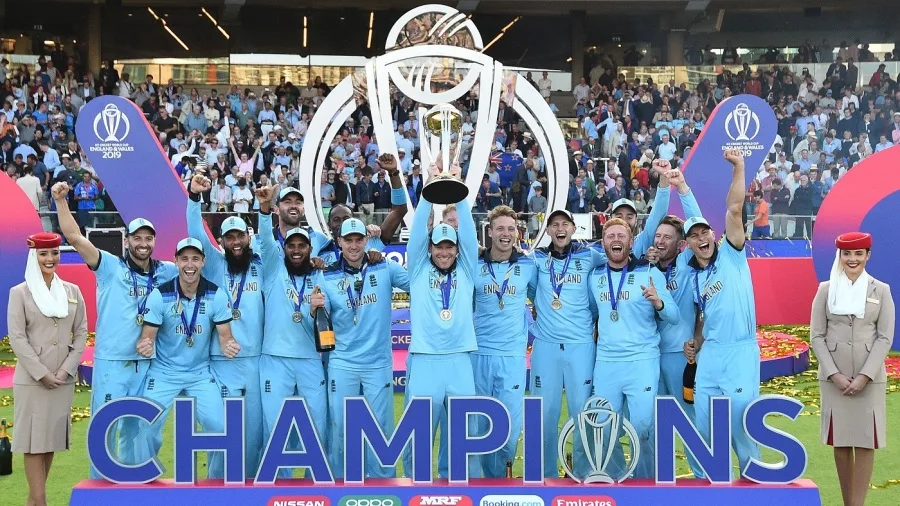
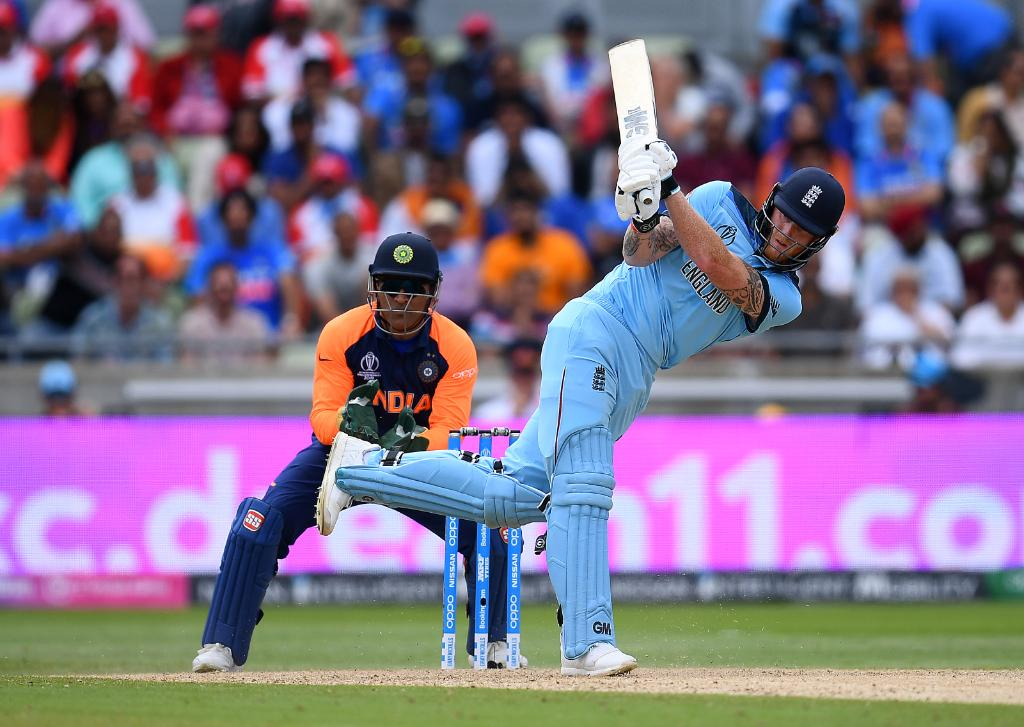
A return to Sky Blue for England, who hosted the tournament for the 5th Time and manufacturers New Balance pulled off a wonderful homage to the kit worn in 1992 with a shoulder design reminciant to that kit but using various shades of blue with red trim to deliver one of the most iconic England kits in any sport (yes the result also might have something to do with that!!)

The Sky Blue look was only ever used for the World Cup, the shirt was paired with Navy Trousers after this tournament.

A first of this tournement was the introduction of “Alternative” Shirts / Kits for colour clashes, something not normally asscioated (or needed) with cricket, it did provide a new talking point for Kit Lovers like ourselves! India, one of the teams that changed when they played England.

England CWC Performance:

  • WINNERS
  • 3rd in League Phase (10 Countries)
  • Total Games – 11 (8 Wins, 3 Lost)
  • ODI Kit Rating – ⭐⭐⭐⭐⭐

2023: India

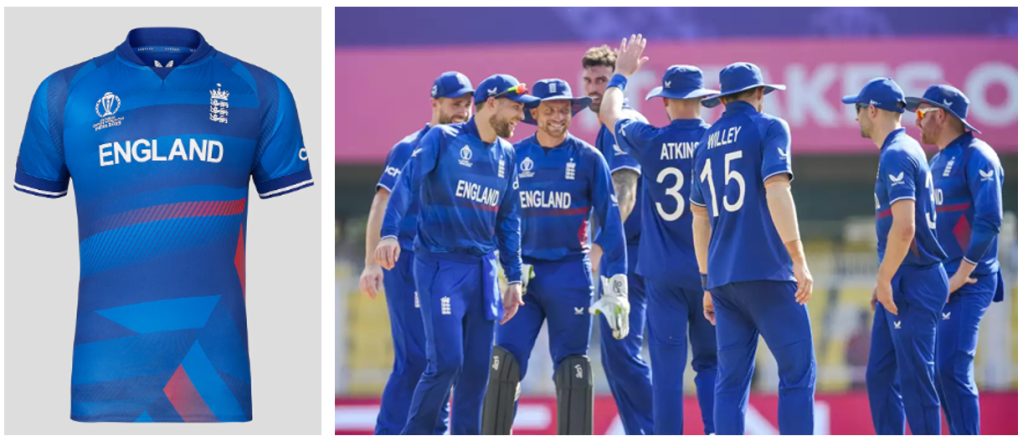
For this World Cup the English Team will be doned in a Castore Kit, the 5th Kit Manufacturer since 1999 and their 3rd different one in the last 3 World Cups. It is a return to Royal Blue and back to some red detailing within the shirt and to give us an overall look that was reminiscent to what was seen in 2015.

It will be interesting to see if we see “Away” kits used in this tournament, and if England do use one would they use the current Red T20 Shirt which is paired with Navy Trousers as well.

As no performance stats can be shared yet, I will just provide my rating of the Kit.

  • ODI Kit Rating – ⭐⭐⭐

Cricket World Cup Kit Firsts…

  • 1992 – Coloured Clothing and Player Names
  • 1999 – Squad Numbers, 1 to 15
  • 2003 – Countries own Kit Manufacturers
  • 2003 – Player numbers could be anything between 1-99
  • 2003 – Country Names on Front of shirts
  • 2019 – Away Kits for Colour Clashes
  • 2023 – ???

So there we have it, my deep dive into England Cricket ODI Kits of the World Cups, did my ratings line up with your views of these looks, let me know your thoughts and comments below or at @Kit_Geek

Kit Log – World Cup, Spain 1982

With the next World Cup just around the corner and over the next few weeks we will see the full complement of kits that will grace this tournament, I thought I would take some time and revisit some previous tournaments, starting with Spain 1982.

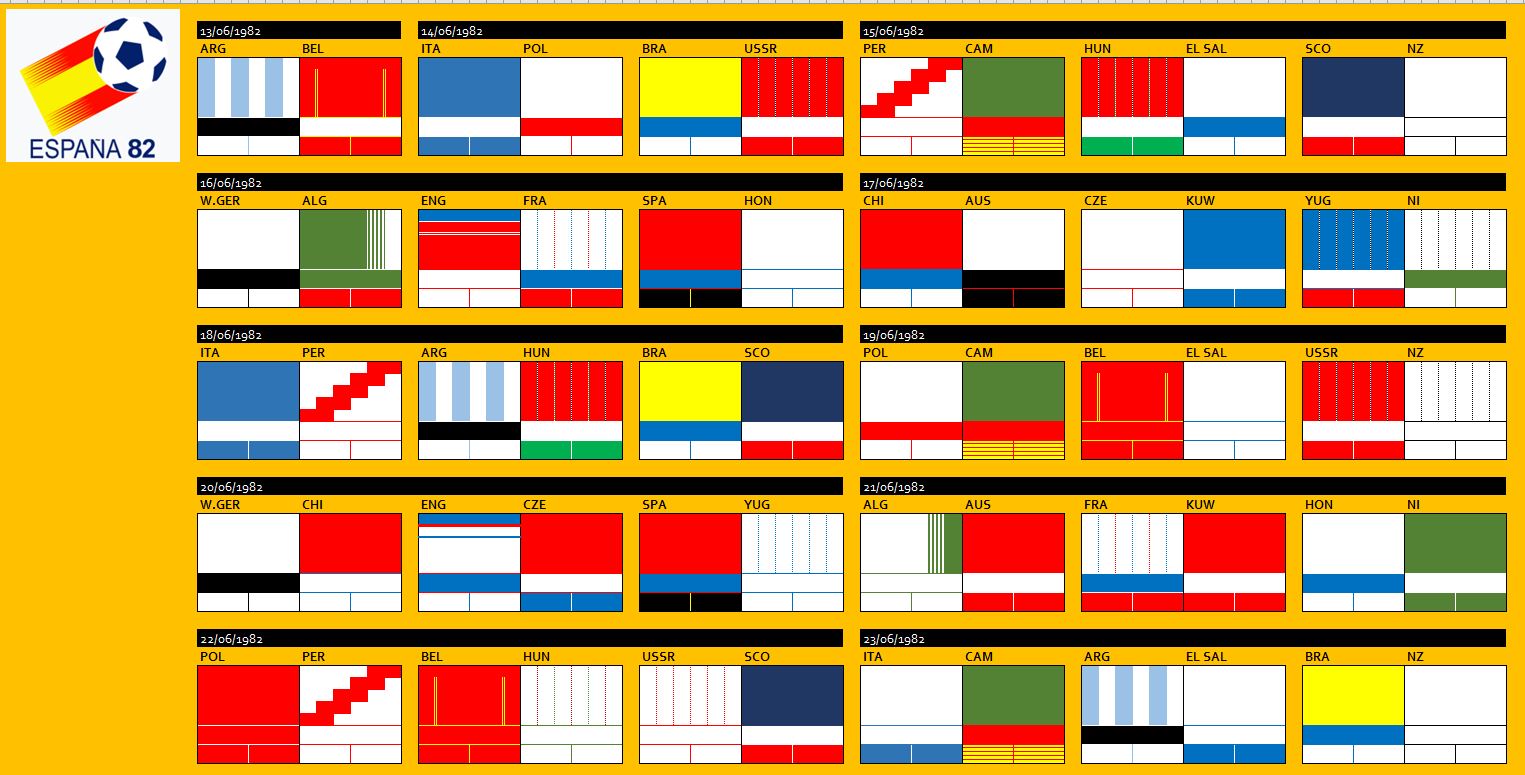
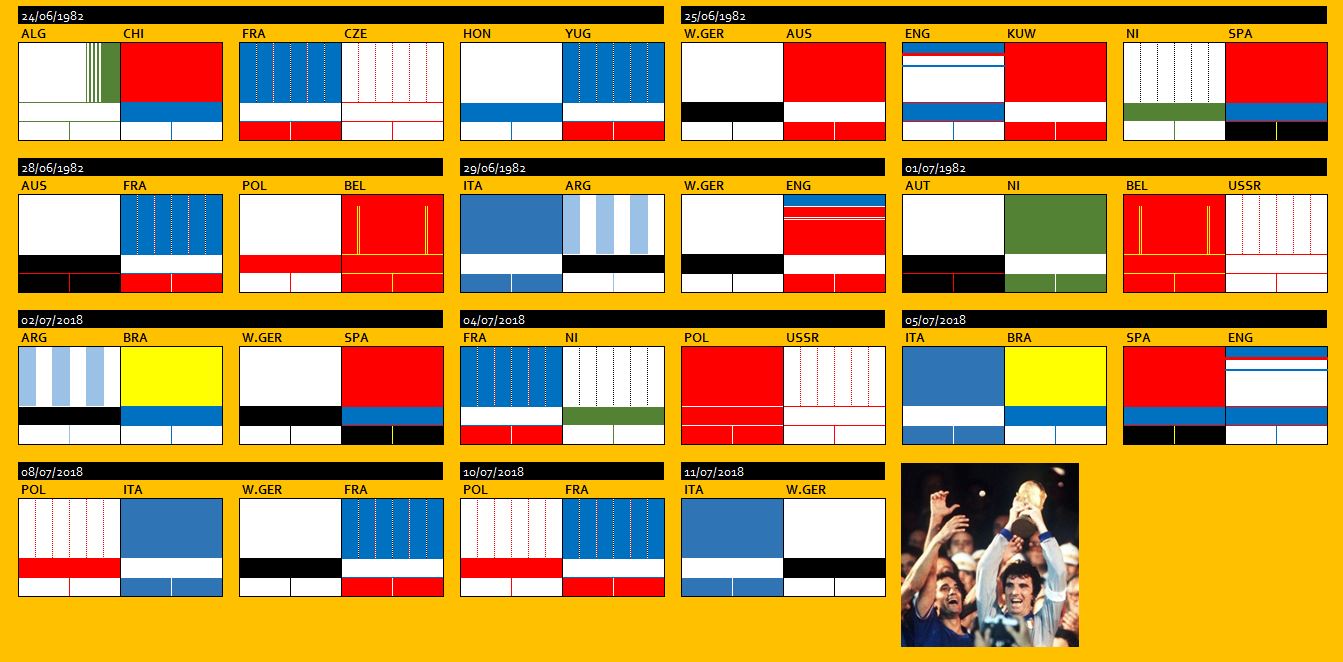
The tournament took place between 13th June 1982 and 11th July 1982, now from here I will not waste any of your time with the references to the games and the eventual winners Italy (or the controversy that surrounded the team before the tournament), those details can be found elsewhere and in much detail and accuracy than I could provide, all we are looking at here are the kits…. who wore what and against whom!

So my friends, I give you The World Cup, Spain 1982…

Spain82_1

One thing to note about the tournament was the format, this was very different to what we see now, in this version of the World Cup the initial group stage (six groups of four teams) was then followed by second group phase that saw four groups of three teams with the winners of each group progressing to the Semi-Finals.

In terms of kits, you will notice a lot of pin-striped kits, most of these where Adidas kits and something of a popular template of the era and took us from the very plain kits of the 70s into a more vibrant age of football kit design.  A couple of things that immediately spring to my mind when creating this log was the use of different kits in the same colour for a couple of countries.  Both New Zealand and Czechoslovakia had both plain and pinstripe white kits over the course of their participation of the tournament.

Spain82_2

England, not only did they remain unbeaten in the tournament but also had one of their iconic kit designs, which is instantly recognisable to football fans and was arguably a high point in the kit designs of Admiral.

There was also some interesting kit designs from Algeria and Belgium, who sported the classic tramline kit from Admiral, however this was transitional period for kit design with many countries including winners Italy remaining faithful to their historical kits and keeping it simple, however that was all about to change…..